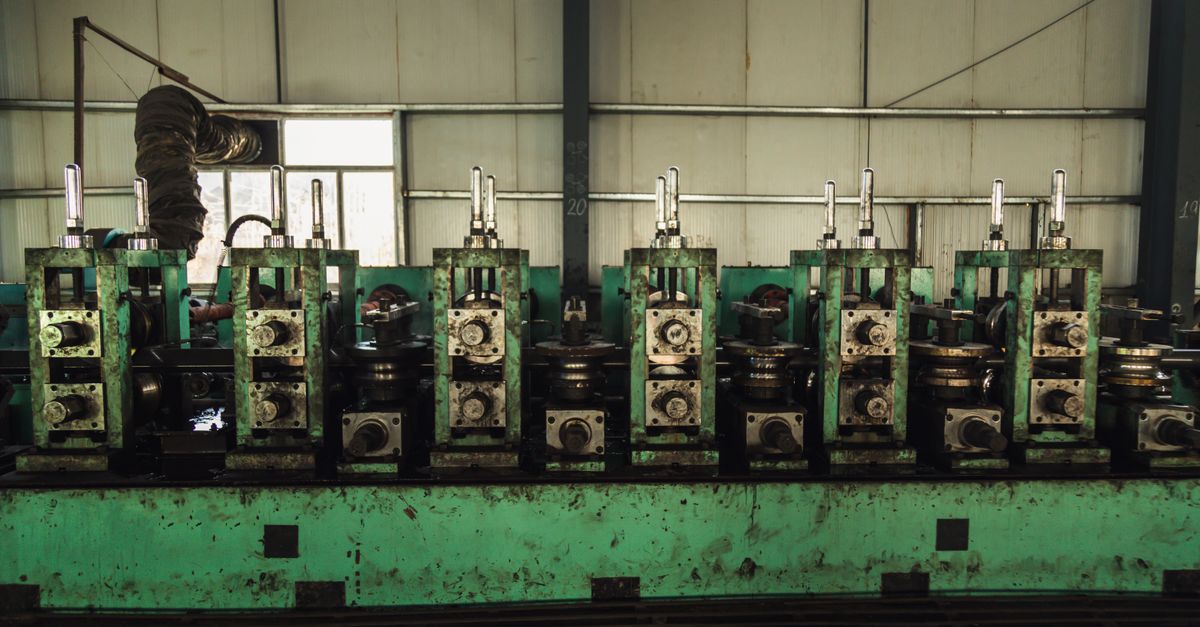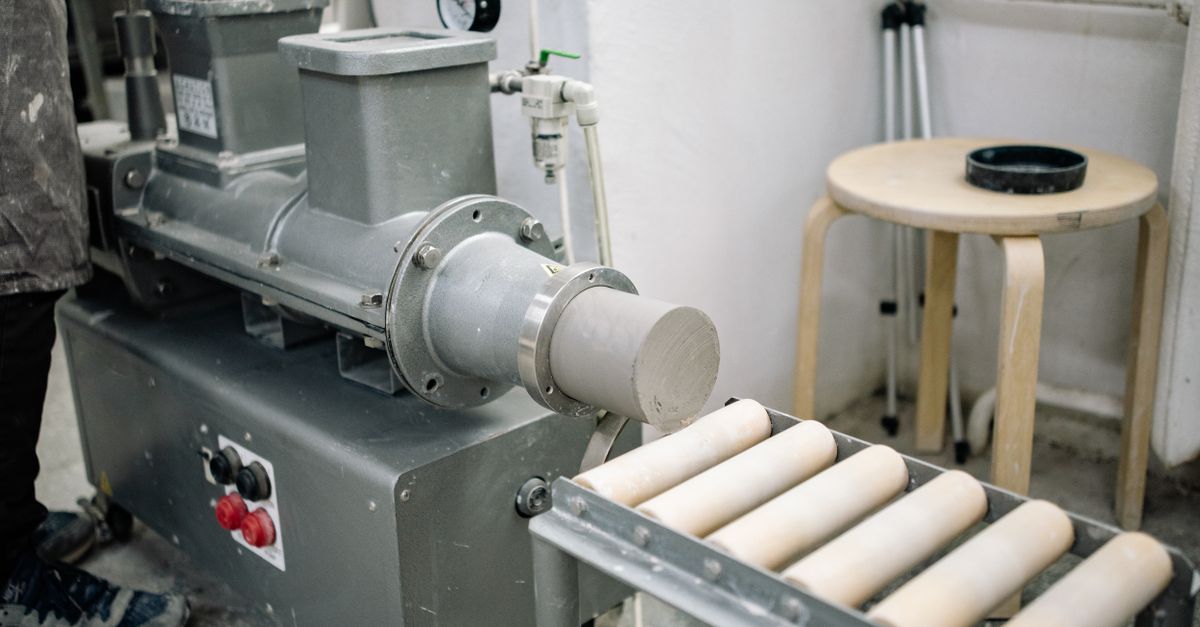
Buying a machine converts available cash into production capacity over several periods. That exchange makes economic sense only when capacity becomes products that customers accept, receive and pay for. Productivity, scrap and quality therefore measure how capital performs: they help explain how much money the operation ties up, how much is lost before a sale and what additional benefit might support the investment. A faster machine can improve these measures, but it can also accelerate inventory accumulation.
A machine is a means; the investment needs a business case
The entrepreneur's first question should be specific: what constraint prevents the business from serving commercially attractive demand? The problem might be insufficient speed, inconsistent dimensions, frequent downtime or wasted raw material. Each requires a different response. Buying capacity to address inadequate maintenance can tie up money without removing the cause. Replacing equipment that determines final quality, however, may be justified even without increasing sales volume.
An investment case describes a chain that can be checked: an intervention changes the process; the process delivers more conforming units or uses fewer resources; those units find buyers; and collections compensate for additional outflows. Any assumption connecting these steps must remain visible. A manufacturer's stated capacity describes performance under particular conditions. It is not verified evidence of what the buyer's factory will produce.
This article follows a hypothetical factory to connect these decisions. Every monetary amount and performance figure is an arithmetic assumption, not a market quotation, financing offer or expected result for another business. The method matters more than the scale: identify the constraint, measure current performance, test the improvement and establish whether cash can support the transition.
Measure acceptable output, not just throughput
A productivity measure needs a numerator and denominator suited to the decision. Units produced per operating hour measure speed. Conforming units per scheduled hour also reflect downtime and quality losses. Contribution margin per hour of the factory's limiting resource adds an economic perspective. These measures complement one another: high speed can coexist with poor usable output and excessive material consumption.
The example factory schedules 160 hours each month. Its current machine operates for 150 hours and produces 50 gross units per operating hour, giving 7,500 gross units. At an 8% scrap rate, 600 units are lost and 6,900 conforming units remain. Useful productivity is therefore 43.125 conforming units per scheduled hour: 6,900 divided by 160. Reporting only 7,500 divided by 150 would conceal both scheduled time lost and rejected output.
Records should distinguish scheduled time, equipment availability, time actually producing and setup time. They should also identify why interruptions occur. Material shortages, maintenance and waiting for inspection require different remedies. Availability can sometimes improve without a purchase; conversely, a new machine can lose hours because replenishment remains unreliable. A production target should not assume that replacement automatically resolves every interruption.
A calculation becomes an observed fact only after its inputs have been checked. Here, the inputs are teaching assumptions. A real baseline would require production records, downtime logs and quantities released by quality control. If the business does not measure these variables, measurement may be its first necessary investment. It reduces the risk of buying an answer to a poorly defined problem.
Scrap, rework and customer defects consume resources differently
Scrap is a loss that prevents an item from continuing as usable output under the established criteria. Rework requires additional operations to make an item conform. A defect discovered by a customer can cause returns, replacements, freight charges, discounts or the loss of a commercial relationship. Combining all three into one defect percentage obscures where money is consumed and which intervention could recover it.
An item scrapped early loses material and relatively little processing effort. The same item rejected after machining, treatment and finishing contains more accumulated resources. Physical counts therefore need the stage at which each loss occurs. When assessing a machine, determine whether it creates a defect, merely reveals it or receives an already defective item. Replacing the equipment that detects a fault does not remove an upstream cause.
In the example, each gross unit incurs R$20 in variable costs, covering the variable components included in the analysis. Scrap has no recovery value, and rework is not recorded separately. The 600 rejected units therefore represent R$12,000 of those monthly costs. This simplification keeps the arithmetic traceable. Actual proceeds from scrap sales, recovered material and different processing costs at different stages would require adjustments.
Quality also means consistency and suitability for the agreed use. Lower rejection achieved by relaxing inspection is not a demonstrated economic improvement; it may transfer losses to customers and later periods. Acceptance criteria must remain comparable before and after the purchase. If the product or specification changes, separate that effect from the benefit attributed to the machine. Otherwise, an apparent quality gain may reflect a changed definition.
Find the bottleneck before multiplying capacity
Factory capacity depends on the entire production sequence. A machine capable of 9,000 gross units cannot deliver that result if the preceding process supplies only 7,000 or inspection releases only 6,000. The bottleneck can move after an investment. This does not necessarily invalidate the purchase, but it changes its scope and may require complementary work on material handling, tooling, packaging or shift organization.
A useful process map follows the same product from incoming material to dispatch. For every stage, record available time, conforming output, queues and batch restrictions. Include the product mix: two items may occupy the same machine for very different lengths of time. An overall average becomes misleading if sales growth concentrates on the slower item. More units sold can then consume more capacity than the plan anticipated.
The example assumes that the machine under review is the bottleneck and that all other stages can support 9,000 gross units monthly. The replacement would still operate for 150 hours but increase speed to 60 units per hour. Gross production would reach 9,000. At 3% scrap, 270 units would be rejected and 8,730 released. Availability would remain unchanged; speed and quality would provide the improvement.
Test that assumption using the actual product, normal material, available operators and the factory's utility conditions. A short demonstration without tool changes or interruptions may establish speed while revealing little about monthly delivery. Useful evidence reproduces the buyer's operating constraints. Testing should also establish how to identify a supposed improvement that simply moves a queue into another department.
Build a baseline that can withstand scrutiny
A credible baseline is not the worst month selected to make a purchase attractive. It should represent the operation that would continue without the investment, including planned maintenance, seasonality and changes already contracted. If existing equipment is temporarily idle for an inexpensive replacement part, comparing that period with the new machine at full capacity exaggerates the benefit. Relevant alternatives may include repair, reorganization and replacement.
The records must reconcile quantities. Gross production less scrap does not automatically equal sales: there may be inventory, samples, items awaiting inspection and differences in reporting cutoffs. Reconcile opening inventory, additions, quality releases, dispatches and closing inventory. If quantities do not balance, the indicator becomes unreliable for a capital decision, however precise the dashboard looks. Investigating the difference is part of establishing the baseline.
In the teaching baseline, all 6,900 conforming units sell each month for R$40 each. Revenue is R$276,000. Producing 7,500 gross units incurs R$150,000 in variable costs. Contribution margin is therefore R$126,000 before existing fixed costs and other business obligations. This is not a statement of profit: existing fixed expenditure and anything outside the chosen cost definition still need to be considered.
For a real analysis, the selling price should reflect relevant discounts and allowances, with consistent treatment of Brazilian taxes and other deductions. Variable costs also need a stable definition. Revenue measured under one convention and costs under another can create an artificial margin. Identify each input's source and explain its scope so production, finance and potential funders evaluate the same operation.
Separate speed improvements from quality improvements
At the proposed steady state, 9,000 gross units would produce 8,730 conforming units, all sold at R$40. Revenue would be R$349,200. Variable costs would total R$180,000, maintaining R$20 per gross unit. Contribution margin would reach R$169,200, an increase of R$43,200 over the R$126,000 baseline. This difference depends on selling the additional units under the assumed terms and collecting payment.
The increase of 1,830 conforming units has two sources. Raising gross production from 7,500 to 9,000 while retaining 8% scrap would yield 8,280 good units, an increase of 1,380 attributable to speed. Reducing scrap from 8% to 3% across those 9,000 gross units adds another 450 conforming units. Together they explain the full 1,830 increase without counting the same benefit twice.
Quality can also be examined by calculating the material required to deliver a fixed volume at different yields. That answers a different question. Do not add savings calculated for constant output to an expansion margin that already includes lower scrap; part of the benefit would be duplicated. Choose the scenario first, then apply its logic consistently. A calculation can be valid on its own yet become misleading when combined with an incompatible calculation.
The investment would also create R$6,000 in additional monthly fixed costs or recurring commitments, such as contracted maintenance, support and incremental operating resources. The operational benefit would fall from R$43,200 to R$37,200 monthly. This amount, still dependent on demand, execution and omitted items, will be used to examine the initial outlay and payment obligation. Speed alone does not pay for equipment.
Turn technical capacity into a testable sales assumption
Moving from 6,900 to 8,730 units sold requires 1,830 additional monthly sales, an increase of approximately 26.5%. Equipment establishes potential supply; customers must sustain demand. The commercial assumption should identify products, buyers, quantities, prices and payment terms. An aggregate growth forecast may conceal that the only interested customer requires a discount, longer credit or specifications that reduce productivity.
Firm orders, recurring purchase history, proposals under negotiation and expressions of interest provide different levels of evidence. They should carry different weights. Even an order may allow cancellation or require technical approval. Check whether additional sales can be achieved without excessive customer concentration. If a major buyer stops ordering, the capacity remains installed and equipment payments continue, while finding replacement demand may take time and money.
The example assumes that all 8,730 units sell at the baseline price. This demanding assumption must be tested against the commercial effort required. Additional commissions, freight to new markets and packaging requirements can change incremental costs. If these are absent from the R$20 per gross unit or the additional R$6,000 monthly commitment, include them before deciding. A larger order book does not automatically preserve the original margin.
Strengthen the plan by separating growth into supported components: retaining existing sales, expanding purchases by current customers and acquiring new buyers. Record the evidence and outstanding conditions for each component. This can support postponing part of the investment, negotiating staged deliveries or selecting a smaller capacity option when commercially supported demand remains below technical potential.
Budget the full installation and recognize working capital
The hypothetical budget includes R$360,000 for equipment, R$30,000 for installation and R$10,000 for training and initial preparation: R$400,000 to put the solution into operation. This does not automatically cover building work, electrical upgrades, extra tools, software licences or disposal of the previous machine. Check each item individually, including anything the supplier assigns to the buyer. A quoted machine price is not necessarily a complete implementation budget.
Expansion also increases the money needed between paying for inputs and collecting sales. Additional monthly revenue is R$73,200. Assuming, for simplicity, one month of additional sales outstanding, customer receivables rise by that amount. Suppose inventory also increases by R$12,000 and additional supplier credit finances R$35,200. Net working capital increases by R$50,000: R$73,200 plus R$12,000 minus R$35,200.
The base plan therefore requires R$450,000: R$400,000 for implementation and R$50,000 for working capital. The R$50,000 is not a recurring monthly expense and should not be deducted from margin repeatedly. It represents resources committed to the operating cycle. It is also not an unrestricted emergency reserve. Spending it on installation delays could leave the business unable to buy material for its first production runs.
This estimate assumes stable volumes and payment terms. Supplier minimum orders, advance purchases and concentrated collection schedules can increase the peak requirement. Use a weekly simulation where outflows are concentrated. If the budget contains no contingency, state that clearly. Calling R$450,000 sufficient under every circumstance would turn a conditional estimate into an unsupported guarantee.
Fit the transition into the cash flow schedule
Consider hypothetical financing of R$300,000, repayable in 30 monthly instalments of R$12,000 starting in the project's second month. Total nominal instalments would be R$360,000. The R$60,000 difference from the financed amount does not, by itself, establish an effective interest rate: contractual charges, expenses and flow timing determine the actual cost. These are arithmetic assumptions, not market terms. The business would provide the remaining R$150,000 of the base plan.
In month zero, the supplier would receive a R$100,000 deposit. In month one, the remaining R$260,000 equipment balance, R$30,000 installation charge and R$10,000 preparation cost would be paid. Financing would release R$100,000 for the deposit and R$200,000 in month one. The business would contribute the other R$100,000 needed at that stage, followed by R$50,000 of working capital in month two.
The schedule assumes the old machine maintains baseline sales throughout installation. In month two, the new operation would produce 8,000 gross units at 5% scrap, delivering 7,600 good units. Revenue would be R$304,000 and variable costs R$160,000. Contribution of R$144,000 exceeds the baseline by R$18,000. After R$6,000 in additional costs and the R$12,000 instalment, no incremental monthly benefit remains.
In month three, 8,750 gross units at 4% scrap would yield 8,400 good units. Revenue of R$336,000 less R$175,000 in variable costs leaves R$161,000 contribution. The improvement over baseline is R$35,000, or R$17,000 after additional costs and the instalment. From month four, steady-state incremental benefit after those payments would be R$25,200 monthly. Actual collections must still support this schedule; recognizing a sale does not establish when cash arrives.
Use payback and coverage without confusing results with available cash
Dividing the R$450,000 base-plan requirement by the R$37,200 steady-state operational benefit gives approximately 12.1 months. This is simple payback before financing, assuming the full benefit begins immediately. It is not the actual recovery period. It ignores installation, the early production ramp, the time value of money, possible additional taxes and any outlays excluded from the simplified model.
The amount remaining after financing should not be labelled profit either. Steady-state R$25,200 is an incremental difference after additional operating costs and the instalment. The company's overall position still depends on existing fixed costs, other debts, collections, owner withdrawals and obligations outside this project. A positive expansion can coexist with an underlying business deficit. Project calculations must therefore be reconciled with the company's full cash forecast.
For a volume reference, contribution per good unit under the new process is R$40 minus R$20 divided by 0.97, approximately R$19.38. Preserving the baseline R$126,000 contribution while covering R$6,000 in additional costs and a R$12,000 instalment requires about 7,430 units sold monthly. This assumes production matches sales, yield is 97% and unit prices and costs remain constant.
That volume is an incremental comparison threshold, not the break-even point of the entire company. It also ignores how collections are distributed within a month. It supports a practical condition: if verifiable demand falls below this level, revise the plan. Demand above it still requires examination of the safety margin and other obligations. The indicator summarizes relationships; it cannot replace a cash assessment.
Stress-test scenarios that require a response
Suppose the factory produces 8,730 conforming units but sells only 7,800. Sales revenue is R$312,000. If it pays all R$180,000 of variable production costs that month, the simplified difference is R$132,000; this is not the contribution margin on units sold, and cash conversion still depends on collections. Allocating production costs across conforming output, including scrap, assigns approximately R$160,824.74 to sales and R$19,175.26 to the 930 units remaining in inventory. Sales contribution is R$151,175.26. However, the simplified R$132,000 revenue-to-production-outlay comparison exceeds the R$126,000 baseline by only R$6,000, all consumed by additional operating costs. Even if customers pay in full that month, the project has an incremental R$12,000 shortfall against its instalment.
If production instead matches the 7,800 units sold, a 97% yield requires approximately 8,041.24 gross-unit equivalents for calculation purposes. Variable costs are approximately R$160,824.74. Contribution is R$151,175.26, leaving R$7,175.26 after additional costs and the instalment, relative to the baseline. Actual whole units and production batches require minor adjustments. Lower utilization can protect cash by avoiding unsold production, even though the machine's physical efficiency is unchanged.
In another scenario, speed improves but scrap remains at 8%. The 9,000 gross units yield 8,280 good units. Selling all of them at R$40 produces R$331,200 revenue. After R$180,000 variable costs, contribution is R$151,200. Deducting the baseline contribution, R$6,000 additional costs and the R$12,000 instalment leaves R$7,200. Missing the quality improvement consumes much of the expected cushion.
Each scenario should trigger a defined action: reduce batches, postpone a purchase stage, require technical correction or stop commercial expansion that erodes margin. Installation delays need separate treatment, especially if the old machine has already been sold. A pessimistic spreadsheet column is insufficient. Identify who decides, what signal triggers review and which resources could carry the business through the disruption.
Turn technical promises into evidence and negotiated obligations
Negotiation starts with a description of the required outcome. Model, accessories and nominal speed are insufficient when the benefit depends on yield and repeatability. Specify the reference product, raw material, operating conditions, measurement method and acceptance criteria. A test using an easy part does not establish performance for a complex product family. Approval of a few units also does not demonstrate stability throughout a production batch.
The parties can negotiate testing at the supplier's premises and then at the buyer's factory, assigning responsibility for transport, assembly and corrections. Payments linked to verifiable milestones can distribute risk if the contract explains what happens when a milestone is missed. Payment retention, adjustment periods and return conditions are not automatic rights to assume. They must be negotiated and properly documented.
Include spare-part availability, response times, operator training and dependence on proprietary consumables. Low purchase cost can conceal high recurring expenditure or prolonged downtime when a component fails. A technical warranty is not automatic compensation for lost sales. Understand its actual coverage and responsibility for travel, dismantling and transport. The contract's practical value depends partly on whether the supplier can provide the promised remedy when needed.
Discuss price alongside the risks each party controls. The supplier controls specified equipment characteristics and services; the buyer controls material supply, operators and some installation conditions. Requiring either party to guarantee everything can create conflict or ineffective clauses. Clear responsibilities and reproducible testing provide a stronger basis for agreement and help prevent commercial acceptance before relevant performance has been verified.
Coordinate production, quality, sales and finance
Production sees lost hours; quality sees variation and defects; sales sees delivery constraints; finance sees committed cash. Investment decisions improve when these perspectives come together without requiring everyone to advocate the purchase. The project owner should consolidate assumptions and record disagreements. An objection may reveal an omitted cost or a condition that still needs testing. The aim is an examinable decision, not unanimous enthusiasm.
A common disagreement arises when sales requests capacity for orders still under negotiation while finance accepts only signed commitments. The response need not be choosing one position wholesale. Separate historically supported demand from growth conditional on new orders, then assess modular implementation or temporary outsourced production. Outsourcing has its own costs and risks, but it may provide information before the business commits a larger amount.
Another conflict arises when production favours large batches to reduce setups while cash management requires less inventory. The appropriate measure depends on the objective. Maximizing units per hour can delay other products and tie up resources in slow-moving stock. Review conforming deliveries, inventory and contribution together. Rewarding machine occupancy alone can encourage output that weakens the investment's financial purpose.
Assign practical roles: production records time and quantities; quality validates criteria and losses; maintenance monitors failures and consumables; sales updates demand evidence; finance reconciles costs, collections and commitments. The entrepreneur decides material exceptions while retaining the overall business perspective. Disclose supplier commissions and remuneration linked to obtaining capital so participants can distinguish commercial incentives from independent assessment.
Present the project to potential funders with clear boundaries
An equipment project is easier to assess when it presents the production problem, baseline, proposed intervention, budget, demand evidence, cash schedule and adverse scenarios. Documentation makes the expected source of benefit and the risks retained by the business open to examination. A polished presentation cannot make uncertainty disappear. Its purpose is to make assumptions traceable and alternatives comparable.
KEZS connects entrepreneurial projects and potential funders through technology and intermediation. A project-focused method can help organize information and explain the intended use of resources. KEZS does not assign a credit score. Investors and other participants perform their own diligence and make their own decisions. Documenting an investment case is not evidence that financing has been approved, that funding has occurred or that the project has been executed.
The capital structure must fit the project. A loan creates repayment obligations. Receivables financing depends on existing eligible claims, which differ from hoped-for sales. Equity creates ownership rights and exposure to business risks; convertibles depend on their agreed terms. A donation to a nonprofit is neither an equity investment nor a promise of financial return. Under the Brazilian framework, a MEI cannot admit equity partners while remaining a MEI.
Public securities distribution and regulated financial activities require appropriate structures and providers. Technology or a CNAE business activity classification is not permission to conduct them. A productive machine cannot correct an unsuitable funding structure. Contractual and regulatory assessment must accompany transaction design, including rights, costs, conflicts and possible losses. There is no guarantee of approval, repayment, profitability, liquidity or preservation of capital.
Control documents, versions and information quality
Evidence may include production logs, quality reports, supplier quotations, maintenance records, customer orders and calculation notes. Each document needs an identifiable source, responsible person and version. When a quotation changes or testing revises the scrap assumption, show which input was replaced. An earlier report should not continue supporting a decision as though it reflected current conditions. Version control connects the calculation to the evidence actually available.
Access to commercial and personal information should be proportionate to its purpose. A potential funder may need to assess customer concentration before receiving every identified customer document. Staged sharing, permissions and access records can reduce exposure. Quotations and contracts may also contain industrial secrets. Centralizing files does not remove the need to decide what each participant may consult or the cost of administering those controls.
A digital integrity record may help demonstrate that a version has not changed; it does not establish that the contents are true. Blockchain likewise does not prove legal title, reserve solvency or payment certainty. Private documents should not be placed on public blockchains. The central task remains checking information's origin, accuracy and relevance. A tamper-evident record can preserve an inaccurate claim just as effectively as an accurate one.
A frequent mistake is correcting a spreadsheet without revisiting the decision based on it. If scrap was measured against inspected units but applied to all production, the projection may be biased. Correct the denominator, recalculate the benefit, inform affected participants and reassess whether the purchase still meets its criteria. Transparency includes acknowledging a changed conclusion when the original assumption is no longer supported.
Make the purchase a process of learning and accountability
Purchase authorization should record the grounds for the decision and how they will be checked. Here, steady-state reference points are 9,000 gross units under defined conditions, 3% scrap, sales of 8,730 units and R$6,000 in additional monthly costs. These should not become rigid targets that encourage hiding losses. They help distinguish technical underperformance, insufficient demand and costs that differ from the estimate.
During implementation, monitoring must be more frequent than monthly reporting whenever cash is under pressure. After stabilization, reconcile production, quality releases, dispatches, collections and payments routinely. Preserve a consistent comparison of sold volume, effective price, cost per gross unit and losses. Explain changes in product mix or working hours so an apparent improvement is not merely the result of longer operation or easier products.
If results fall short, begin with the cause. Process adjustment, training, supplier intervention and rescheduling solve different problems. Continuing to build inventory to demonstrate productivity makes matters worse. Market changes also require reassessment. Selling, redeploying or reducing machine use may cost less than persisting with the initial plan, although none of these alternatives guarantees recovery of the capital invested.
Before committing resources, the entrepreneur should be able to show which loss will fall, how much additional conforming output can be sold, which payments precede collections and what decision follows if an assumption fails. Connecting these answers turns productivity, scrap and quality into more than isolated factory indicators. They become evidence for a capital decision that can be monitored, challenged and corrected throughout execution.
Frequently asked questions.
How do I decide between buying a machine and improving the existing process?
Compare alternatives that address the same constraint. Maintenance, new tooling, setup changes or training may recover capacity with a smaller outlay. A purchase becomes better supported when the limitation persists after those corrections or existing equipment cannot meet the required specification. Compare conforming output, complete costs, implementation time and interruption risk. The lowest initial price does not identify the best option, and the highest nominal capacity does not justify replacement on its own. Include the realistic performance of the repaired or improved process as an alternative.
Does a lower scrap rate always release cash immediately?
No. It may reduce future material purchases, increase saleable output or simply create more finished inventory. The cash effect depends on production scheduling and payment and collection terms. If gross production stays unchanged and additional good units remain unsold, physical yield improves while money remains committed. Track consumption, purchases, inventory and collections separately. This shows both the economic benefit and when it becomes cash. Reduced waste is useful, but cash release requires an actual change in outflows, collections or resources tied up in the cycle.
Can additional revenue determine the instalment the business can afford?
Additional revenue is only the starting point. Deduct the costs of producing and selling that volume, recurring expenditure created by the investment and the working capital required by the cycle. Then consider the company's existing obligations. In this example, R$73,200 of additional revenue becomes R$37,200 of operational benefit before the instalment. Even that amount is not automatically available on the payment deadline, because customers may pay after suppliers. Instalment assessment therefore needs the timing of the full company's cash flows, alongside the project's incremental calculation.
How can equipment be assessed without reliable operating history?
Reduce uncertainty rather than conceal it inside a projection. Measure representative batches, record interruptions, check quality criteria and test with the supplier. Where evidence remains incomplete, use ranges and identify the assumptions that most change the decision. A smaller investment stage or temporary solution may generate useful information before a larger commitment. Complete certainty is unnecessary, but the business needs to identify what remains unknown and the potential cost of being wrong. Keep measured results separate from supplier claims and management estimates.
What if the supplier and factory measure quality differently?
Agree on a common method before acceptance. Define the product specification, sampling, instruments, test conditions and treatment of units requiring rework. Establish whether yield uses all produced units or only inspected units as its denominator. If the disagreement is material, a jointly observed trial or independent technical assessment may help. Signing acceptance before resolving the denominator and measurement method moves the dispute to a more difficult contractual stage. A shared percentage is meaningful only when both parties agree on what was counted and how.
Do existing receivables make any capacity expansion financeable?
Existing eligible receivables may form part of a funding structure, but they are different from expected orders or sales that have not occurred. Their usefulness depends on maturity, concentration, contractual terms, dispute risk and transaction costs. Bringing collections forward also reduces future inflows that might otherwise support current operations. Check whether receiving money now creates a later gap. Funding long-lived equipment with short-term flows requires attention to that mismatch, without assuming automatic renewal or continuing eligibility. Receivables do not remove equipment, customer or execution risk.
What information is needed to discuss the project with potential funders?
A useful initial package includes the production problem, measured baseline, technical proposal, implementation budget, commercial evidence, working capital requirement and staged cash forecast. Explain loss scenarios and execution responsibilities as well. Documents should support the assumptions, with access matched to confidentiality needs. This material makes questions and diligence more productive, but it is not approval, a credit score or a guarantee. Each participant remains responsible for assessing the transaction and the rights and risks of its structure. Clear documentation helps reveal weaknesses as well as potential benefits.
References and context
Institutional reference points for checking applicable rules and guidance. Calculations and scenarios are original examples, not quotes, historical results or individualized recommendations.
- Banco Central — correspondentes no País ↗
- CVM — Resolução 88, texto e alterações ↗
- CVM — Resolução 175, fundos de investimento ↗
- Portal do Empreendedor — perguntas sobre MEI ↗
- ANPD — orientações e perguntas frequentes ↗
AI-assisted educational content. Decisions require verification of the information, instruments and providers in each actual case.