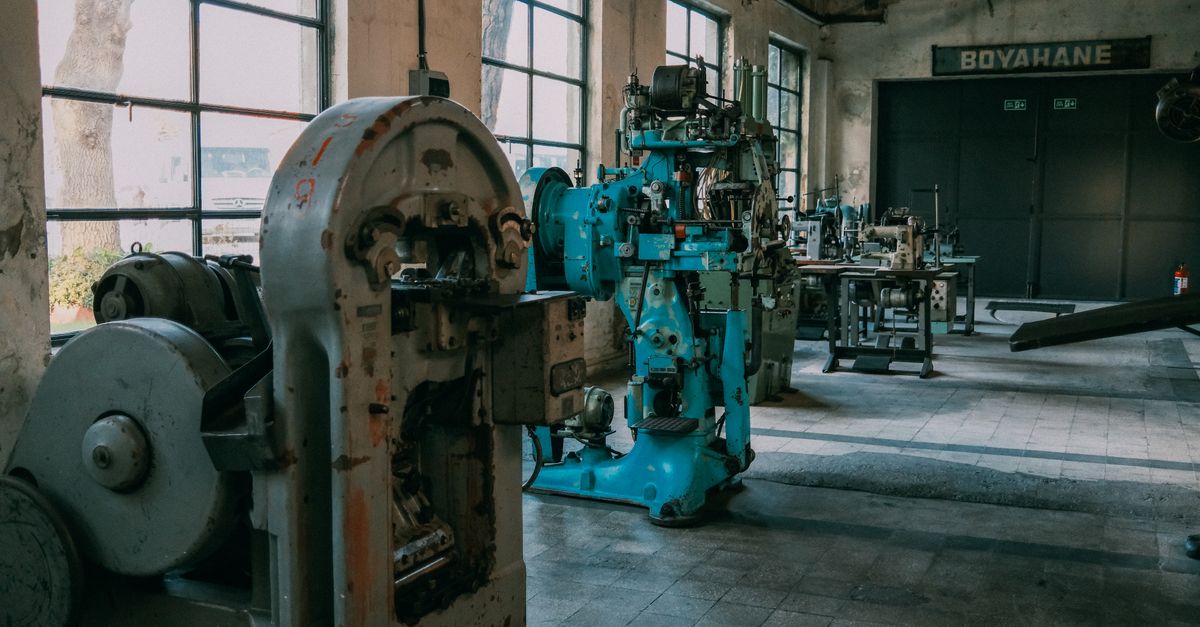
Buying a machine often addresses a visible problem: a production backlog, worn equipment, waste, or reliance on outside suppliers. Future demand is harder to observe. A supplier can demonstrate speed, precision, and output, but those attributes do not establish how much customers will buy. Approving an investment on rated capacity alone turns a technical possibility into an assumed revenue stream.
Machinery adds capacity; demand must support its use
A lower-demand scenario belongs in the plan before the purchase is signed. Its purpose is to identify which commitments remain when orders decline, how much cash operations consume, and which responses remain available. Asking whether the machine will pay for itself is only a starting point. The business must establish when it improves performance and when it puts pressure on an operation that previously remained viable.
Distinguish the reasons for buying. Machinery intended to fulfill contracted orders carries execution and customer concentration risks. Machinery intended to attract customers who have not committed adds commercial risk. Either purchase may be reasonable, but the supporting evidence and cash buffer should differ. Expected sales need an explicit assumption, an owner, a deadline for confirmation, and observable reasons to revise the forecast.
A workable investment plan connects five elements: sellable volume, contribution per unit, additional operating costs, financing commitments, and collection timing. The hypothetical example below develops those connections. Every monetary amount is in Brazilian reais. The figures illustrate arithmetic and decisions; they are not quotations, available credit terms, market rates, or promised returns. A technically sound purchase can still fail financially if these elements do not fit together.
Identify what actually limits sales
Before forecasting growth, identify the current constraint. If the business loses orders because production cannot deliver on time, more capacity may unlock sales. If existing machines are idle and customer inquiries are scarce, another machine is unlikely to remove the main obstacle. Equipment may also accelerate one stage while finishing, inspection, or dispatch continues to limit completed deliveries.
Collect specific records of rejected orders, late deliveries, and overtime. Record quantities, achievable prices, requested delivery times, and reasons for each loss. Separate customers who left because capacity was unavailable from those who rejected a quotation. An exploratory conversation without specifications or commitment is not equivalent to a lost order. Otherwise, the forecast may credit the factory with sales that pricing or product suitability never secured.
Measure capacity in acceptable units of the products actually sold, allowing for the product mix. The same machine might make 6,000 simple components or only 4,000 complex ones over an equivalent period. Tool changes, cleaning, maintenance, and rejected pieces reduce usable output. Catalogue speed without these deductions exaggerates practical capacity and may conceal another investment needed elsewhere in the process.
This investigation can change the purchase itself. A fixture, refurbishment, or temporary outsourcing arrangement might remove the constraint; a smaller machine might suffice. Compare alternatives against equivalent delivery and quality requirements. The objective is capacity the business can convert into sales, with a workable exit if demand disappoints. Capacity that merely moves a queue to another workstation does not establish a commercial benefit.
Build a forecast that exposes its weaknesses
Start with customers and products rather than an arbitrary growth percentage. For each group, record recurring volume, purchase frequency, seasonality, payment terms, and the customer's ability to switch suppliers. Add new opportunities separately. This makes the loss of a major account visible instead of allowing an optimistic average to absorb it. It also distinguishes continuity in existing business from the effort required to win additional orders.
Describe the evidence behind each assumption. Repeat purchasing history supports a different expectation from a quotation under negotiation. Contracts can permit cancellation, impose quality conditions, or state estimated rather than committed quantities. Expressions of interest can guide market investigation without securing revenue. Explain what has been observed and what still depends on the customer's decision; assigning a category must not create artificial certainty.
Give weaker demand a recognizable cause: the largest customer reduces inventory, a competitor lowers prices, or a customer's product launch slips. Estimate the units affected and how long the effect could last. A general 20% reduction can be an initial stress test, but it does not identify who should respond or which information would show that the problem has started.
Retain earlier forecasts and compare them with actual sales. If the team regularly overestimates new business but forecasts repeat customers accurately, revise those components differently. An unexplained safety margin hides the cause of previous errors. A useful revision identifies why the outlook changed and therefore whether the response should involve converting prospects, reducing expenditure, renegotiating deliveries, or postponing the machine.
Define the full investment and the cash buffer
Consider a small component manufacturer evaluating a production expansion. The machine costs R$ 200,000. Installation and electrical adaptations add R$ 20,000; tools and fixtures add R$ 12,000; training and testing add R$ 8,000. Bringing the equipment into operation therefore requires R$ 240,000. These hypothetical figures distinguish the purchase price from the amount required to make the asset usable.
The project also includes R$ 40,000 of initially available cash to support operations. Total funding required is R$ 280,000, comprising R$ 100,000 of the company's own resources and a R$ 180,000 loan. For straightforward arithmetic, assume 36 monthly payments of R$ 6,000, starting in the first operating month. Total payments are R$ 216,000, or R$ 36,000 more than the principal received.
These terms are an illustration. An actual proposal requires checking net funds disbursed, fees, insurance, guarantees, payment timing, and other obligations. Installation quotations also need defined scope: floor preparation, transport, or adaptations may be excluded. Any omitted expenditure uses the same cash intended to protect the business against weaker sales. The difference between R$ 216,000 and principal is not an annual borrowing rate.
Management sets R$ 15,000 as its minimum cash threshold within the R$ 40,000 opening balance. This is an internal planning assumption, not a universal requirement. Below it, the company expects to lose flexibility in meeting upcoming obligations. Although the bank balance starts at R$ 40,000, only R$ 25,000 can be absorbed before the plan requires action. The threshold gives that action a starting point before cash is exhausted.
Compare operations with and without the purchase
The manufacturer currently delivers up to 4,000 acceptable units a month. Normal sales are 3,600 units at R$ 50 each, with variable cash costs of R$ 30 per unit. Unit contribution is R$ 20. Monthly fixed cash expenses total R$ 54,000. Contribution of R$ 72,000 therefore leaves R$ 18,000 a month before other flows excluded from this example.
With the machine, estimated practical capacity rises to 6,500 acceptable units. The selling price remains R$ 50, while variable cost falls to R$ 26, increasing unit contribution to R$ 24. Monthly fixed cash expenses rise to R$ 62,000, including the expected additional operating costs. The R$ 6,000 loan payment is shown separately. Keeping it separate allows the operational change and financing burden to be examined individually.
For a consistent comparison, R$ 50 represents the selling amount available after the sales-related taxes included in the model. Variable costs include cash outlays that change with each unit. Fixed expenses exclude depreciation and loan payments. Initially, all sales are assumed collected in the same month, with no inventory changes. These simplifying assumptions make the first calculations transparent; later sections test their limitations.
The central commercial assumption is 4,500 monthly sales after the adjustment period. Revenue is R$ 225,000 and variable costs are R$ 117,000, leaving R$ 108,000 in contribution. Subtracting R$ 62,000 of fixed expenses and the R$ 6,000 loan payment leaves R$ 40,000 in monthly cash. This is not automatically distributable profit: excluded flows and the company's other requirements still matter. Accounting profit and cash available to owners require separate assessment.
Distinguish cash break-even from an advantageous purchase
Monthly cash with the machine equals R$ 24 multiplied by units sold, minus R$ 62,000 in fixed expenses and R$ 6,000 in loan payments. Contribution must therefore reach R$ 68,000. Dividing R$ 68,000 by R$ 24 gives approximately 2,833.33 units. Because the component cannot be sold fractionally, 2,834 units are needed to move above this simplified cash break-even point.
Reaching that point does not show that purchasing is advantageous. The company already has an operation generating cash. At equal volumes up to the old capacity of 4,000 units, the machine saves R$ 4 per unit but adds R$ 8,000 in fixed expenses and R$ 6,000 in monthly financing payments. The cash difference between purchasing and continuing as before is therefore R$ 4 per unit minus R$ 14,000.
Within that comparable range, the options produce the same monthly cash at 3,500 units: savings of R$ 14,000 cover the additional R$ 14,000. Below that volume, buying reduces cash even if the balance remains positive. At 3,000 units, the new operation generates R$ 4,000; the old one would generate R$ 6,000. The machine works and saves money per component, but total savings do not cover the added commitments.
Above 4,000 units, the old setup cannot supply the same volume. Comparing the central scenario's R$ 40,000 with the historical R$ 18,000 produces a R$ 22,000 difference, combining efficiency gains with sales growth. Attributing that difference to the machine requires evidence that additional sales would otherwise be impossible or more expensive. A positive cash result, an improvement over alternatives, and recovery of the initial investment are separate questions.
Use adverse scenarios that imply different responses
In the weak-demand scenario, sales stabilize at 3,000 units. Monthly revenue is R$ 150,000 and variable costs are R$ 78,000. Contribution of R$ 72,000 covers R$ 62,000 in fixed expenses and R$ 6,000 in loan payments, leaving R$ 4,000. Cash remains positive, but there is little room for errors, exceptional expenditure, or rebuilding the reserve. Purchasing also leaves R$ 2,000 less cash than the old operation at the same volume.
In the severe scenario, volume falls to 2,400 units. Revenue is R$ 120,000, variable costs are R$ 62,400, and contribution is R$ 57,600. Against monthly commitments of R$ 68,000, cash consumption is R$ 10,400. Without the purchase, contribution at that volume would be R$ 48,000 against R$ 54,000 of fixed expenses, consuming R$ 6,000. Weak demand already hurts the business; the investment increases the damage.
A separate scenario tests price pressure. Selling 3,000 units at R$ 47, with variable costs unchanged at R$ 26, reduces unit contribution to R$ 21. Total contribution becomes R$ 63,000, leaving a R$ 5,000 monthly cash deficit after fixed expenses and financing. A seemingly modest price reduction removes the entire cushion in the 3,000-unit scenario. More machine utilization does not necessarily improve cash if margin deteriorates.
Different causes require different responses. Lower volume with preserved margins may call for adjusting scale and converting qualified prospects. Lower prices require examining differentiation, product mix, and discount limits. Persistent contribution losses may require halting expansion and considering an equipment exit. Do not invent probabilities to produce a reassuring average. Where evidence is insufficient, state the uncertainty and test whether the company can survive each path.
Track the monthly sequence and act before cash runs out
Cash depends on the order of events. Assume the business begins with its R$ 40,000 reserve after paying implementation costs. Training and customer development limit first-month sales to 2,000 units. Contribution is R$ 48,000; deducting R$ 68,000 consumes R$ 20,000, leaving a closing balance of R$ 20,000. Even a project that later performs well must finance this initial adjustment.
In month two, sales reach 2,600 units. Contribution of R$ 62,400 means cash consumption of R$ 5,600, reducing the balance to R$ 14,400. The R$ 15,000 management threshold has already been breached despite money remaining in the account. In month three, 3,000 units generate R$ 4,000 and lift cash to R$ 18,400. Waiting for a zero balance would postpone a necessary response.
If monthly sales reach 4,500 units from month four, the next three months add R$ 120,000, ending month six at R$ 138,400. If sales remain at 3,000 units from months three through six, four additions of R$ 4,000 leave R$ 30,400 at month six. Both paths encounter the second-month squeeze. Looking only at the final balance conceals the intermediate financing requirement and its timing.
If sales instead fall to 2,400 units after month three, the R$ 18,400 balance declines to R$ 8,000 at the end of month four and negative R$ 2,400 at month five. A negative forecast identifies an unfunded requirement; it does not authorize or establish access to credit. Respond when projections approach the threshold, allowing for the actual time needed to renegotiate, reduce expenditure, or sell an asset.
Separate sales, collections, and inventory
Assuming immediate collection simplifies the first calculations but may misrepresent the business. Paying for materials and wages before customers pay creates a funding interval. Growth requires financing more activity during that interval. Falling demand can leave previously purchased materials and work in progress consuming resources even as orders decline. Consequently, both stronger and weaker sales can create cash pressure through different mechanisms.
Return to the month with 3,000 units sold and R$ 4,000 in positive cash. Suppose 900 of those units are invoiced for R$ 45,000 but collected two months later. Keeping all other modeled receipts and outlays unchanged, that month's cash worsens by R$ 45,000, becoming negative R$ 41,000. The variable cost of those units was already included. Deducting it again would count the same outflow twice.
The R$ 45,000 returns when the customer pays, provided there is no delay or loss, but the business must fund the intervening period. Recurring payment terms require a complete collections schedule rather than one isolated adjustment. Show opening receivables, new credit sales, and monthly settlements, ensuring each invoice is counted once. An invoice can support a future receipt while leaving today's payment requirement unresolved.
Now consider an additional R$ 23,400 material purchase, equal to the example's variable cost for 900 units, to build unsold inventory. This creates a separate cash requirement without revenue. Add it separately if absent from the earlier model. Idle inventory is not an available reserve at its recorded value: conversion to cash depends on use, a buyer, timing, and possible discounts. Storage and specification changes can further restrict its usefulness.
Verify that savings survive lower utilization
The R$ 26 variable cost is a central technical assumption. It may reflect lower material consumption, less rework, or lower expenditure per unit. Each element needs evidence from compatible materials, accepted components, and a reproducible operating pace. A demonstration using a simple batch does not establish performance across the actual product mix. Check whether results require experienced staff or tooling excluded from the quotation.
At low volume, some efficiency improvements do not become cash savings. Fewer labor minutes per component do not reduce payroll if the same employees remain necessary and employed. Released time may support other work, but its benefit depends on actual use. If the spreadsheet claims variable labor savings while retaining the full payroll in fixed expenses, identify which payment genuinely disappears and ensure classifications do not distort the comparison.
Test an unfavorable revision: variable cost is R$ 28 instead of R$ 26. At 3,000 units sold for R$ 50, contribution falls to R$ 66,000, leaving a R$ 2,000 cash deficit after R$ 68,000 in commitments. A R$ 2 difference per unit reverses the weak-demand result. Validating operating yield may therefore matter more than obtaining a small discount on the machine's purchase price.
Low utilization can also increase startup losses, cleaning requirements, and expired inputs. Producing larger batches to improve a machine-efficiency indicator may simply move the problem into inventory. Schedule production around orders served at an acceptable contribution and delivery time, using batch sizes compatible with demand. Assess efficiency alongside rejects, inventory, and cash so that the business does not reward production it cannot yet sell.
Negotiate to preserve practical options
Negotiation should address late delivery, performance below specification, and demand that fails to grow. Define test products, practical capacity, acceptable quality, training, and acceptance criteria with the supplier. Linking payments to verifiable milestones may reduce exposure where contractually agreed. A clear measurement procedure is more useful than a vague satisfaction clause. Both sides need to understand what constitutes delivery, testing, and successful acceptance.
Request alternatives such as staged implementation, smaller equipment, rental, or shared use where technically feasible. Each carries costs and restrictions. Rental may involve minimum terms and penalties; used machinery may need more maintenance; outsourcing may affect lead times or confidentiality. Compare the full commitment and time required to exit, using equivalent quality and genuinely accessible capacity. A smaller upfront payment alone does not establish lower total exposure.
Discuss a loan schedule consistent with installation and customer collections. A grace period may postpone payments, but it neither removes cost nor assures demand when payments begin. Model the entire proposed contract, including obligations during the pause. If revised terms increase the total or concentrate later installments, show their effect under weak demand before accepting. Timing relief and improved underlying economics are different benefits.
Compare an upfront-payment discount with the value of keeping cash. Saving R$ 8,000 on the purchase may look attractive, yet paying early can remove the buffer needed in month two. There is no universal answer: review available resources, commitments, and actual alternatives. Paying for flexibility can be reasonable when it reduces exposure the company cannot absorb. The comparison must include the timing of the discount and the resulting cash trough.
Resolve disagreements through evidence and clear ownership
Sales may advocate buying, production may favor modernization, and finance may prefer delay. Each sees a legitimate part of the issue: opportunities, operating losses and constraints, or payment timing. Translate these views into verifiable assumptions instead of treating disagreement as a contest over confidence in the business. A forecast becomes more useful when each function explains the evidence behind the number it wants the company to rely on.
The commercial lead should identify customers supporting 4,500 units, the next steps, and expected conversion timing. Production should substantiate practical capacity of 6,500 units and the R$ 26 variable cost, including limitations. Finance should consolidate balances, due payments, and stress tests. Management decides the acceptable exposure, records conditions, and names whoever can suspend further commitments. Responsibility includes escalating evidence that an assumption no longer holds.
Suppose sales expects an extra 1,000 units from a major customer while finance considers the order uncertain. Do not split the difference simply to reach agreement. Retain both scenarios and seek evidence: sample approval, a final specification, or a formal order. If clarification will arrive after the purchase deadline, compare the cost of waiting with the cost of being wrong. An unresolved assumption should remain visible in the decision.
Disclose conflicts of interest, including machine-sales commissions, compensation linked to raising funds, and internal volume bonuses. Such incentives do not invalidate a proposal, but they may favor premature approval. Whoever recommends the purchase should explain the loss scenario and what would change that recommendation. This discipline also prevents money already spent from becoming an excuse for further expenditure unsupported by current evidence.
Prepare the project for external assessment
A potential funder needs to understand the specific bottleneck, complete implementation cost, source of orders, and cash response to weaker demand. Useful documentation includes quotations, commercial evidence, cost assumptions, a schedule, and scenarios. Disclose data limitations, relationships among the parties, and intermediation or structuring expenses affecting the project. Organized information can support discussion, but the quality of its underlying evidence remains essential.
KEZS connects entrepreneurial projects and potential funders through technology and intermediation. Organizing a machinery purchase as a verifiable project may help participants discuss needs, risks, and terms. Investors conduct their own diligence and make their own decisions; KEZS does not assign a credit score. Documentation does not guarantee approval, funding, repayment, profitability, liquidity, preservation of capital, or any particular return. These are distinct uncertainties for the parties to assess.
Funding instruments create different rights and risks. A loan creates contractual payment obligations. Equity involves economic and governance rights, possible loss, and potentially difficult exit. Convertibles require scrutiny of conversion conditions and rights before conversion. Existing, eligible receivables differ from sales merely expected after installation: a forecast alone creates no claim against a customer. The instrument must match the actual transaction rather than borrowing certainty from the production plan.
The structure must fit Brazilian legal reality. A MEI cannot admit equity partners while remaining a MEI. A nonprofit donation is neither equity nor a promise of financial return. Public securities distribution and regulated financial activities require appropriate structures and providers; technology or a CNAE business classification is not permission. These distinctions need specific assessment. An industrial investment plan does not itself authorize a public offering or establish any party's regulatory status.
Use monitoring controls that lead to feasible action
After installation, monitoring should reveal deterioration before month-end. A weekly review can cover confirmed upcoming orders, cancellations, contribution on new quotations, accepted deliveries, and overdue collections. Give each indicator an owner and an identifiable source. A pipeline inflated by old proposals can look reassuring while factory scheduling already shows declining utilization. Reviewing the evidence behind the pipeline matters as much as reviewing its reported total.
Tie triggers to projected cash. In the example, forecasting a balance below R$ 15,000 requires reviewing commitments and presenting alternatives to management. Allow enough time to act: expenditure cancellable within days offers a different response from a contract requiring months of notice. The trigger does not automatically require dismissal, borrowing, or an asset sale. It requires a documented decision based on feasible options and their consequences.
Track causes as well as numerical variances. Below-plan volume alongside more qualified opportunities and approved samples may indicate delayed conversion. Customers rejecting the price and value proposition point to another problem. Repeating the same explanation through several review cycles without evidence turns monitoring into a defense of the original decision. Record which fact will support the next revision and when it can realistically be checked.
Protect orders, contracts, and customer information through access limited to analytical need, version control, and proportionate sharing. Do not place private documents on public blockchains. Blockchain integrity does not prove truthful content, legal title, reserve solvency, or payment, and it provides no capital guarantee. Useful traceability starts with the source data and the ability to reconcile each number to its document. A durable record can preserve an error as readily as a correct entry.
Revise the plan and assess exit without anchoring on sunk costs
A frequent mistake is filling idle capacity with discounts without recalculating contribution. In the example, 3,000 units at R$ 47 produce a R$ 5,000 cash deficit. Discounting helps only if additional volume, costs, and collection timing improve the relevant result. Establish a justified negotiation limit that also considers freight, commissions, returns, and displacement of more profitable orders. Higher sales revenue alone does not demonstrate a better decision.
Another mistake is cutting maintenance to save immediately. More downtime, rejects, or delays may follow when retaining customers matters most. Separate spending that sustains safety and delivery from items that can be deferred without material harm. If a R$ 2,000 cut makes a much costlier failure likely, the apparent saving can deepen the cash problem. Evaluate the consequences of the reduction, not just the amount removed from the expense line.
If weaker demand appears persistent, compare continuing, reducing scale, outsourcing part of production, and selling the equipment. For this decision alone, assume a net offer of R$ 150,000 for the machine and R$ 162,000 required to settle the loan then. Selling would require another R$ 12,000, plus any shutdown and reorganization costs. The original R$ 200,000 purchase price does not eliminate that shortfall or establish what a buyer will pay.
This exit example requires contractual information, including guarantee releases and whether disposal is permitted. Do not assume the sale price can be realized immediately. Compare future cash, execution time, and continuity of customer service for each alternative. Past expenditure explains the present position; the current decision depends on the consequences of options still available. Continuing also carries a cost if additional operating losses exceed what an orderly exit would require.
Finish with a conditional, executable decision
The final plan should tell a checkable story: the business has a defined bottleneck; installed machinery costs R$ 240,000; total funding required is R$ 280,000 including the reserve; and 4,500 monthly sales remain a commercial assumption. At 3,000 units, monthly cash is only R$ 4,000; at 2,400, cash consumption is R$ 10,400. The adjustment period can breach the cash threshold even before a prolonged downturn.
Management can then set purchase conditions: verify operating yield, secure resources sufficient for the lowest projected balance, adjust payment timing, and substantiate the order pipeline. Every condition needs a criterion and an owner. If the required buffer exceeds available money, change the project's size, timing, or structure. Do not fill the gap with an uncommitted capital contribution. A funding possibility cannot be treated as an available opening balance.
Before taking on obligations, collect final proposals and recalculate using their actual terms. Check transport, applicable taxes, adaptations, and support without inserting generic percentages as confirmed costs. Reconcile supplier payment timing with customer terms. A scenario based on earlier conditions cannot validate a changed contract. Retain the version supporting the decision so later monitoring compares equivalent assumptions and makes subsequent changes visible.
After buying, remain willing to revise the investment case. A machine can be technically suitable yet commercially premature; it can save per unit while straining cash. Continuing at a smaller scale or exiting may become reasonable. Preparing for these possibilities is part of investing. A responsible decision matches production capacity to evidenced sales, collection timing, and losses the business can withstand, while recognizing that assumptions and outcomes remain uncertain.
Frequently asked questions.
If a machine lowers unit costs, why can weaker demand make buying it a poor decision?
Savings depend on units actually sold, while installments and some expenses continue. Here, the machine saves R$ 4 per unit but adds R$ 14,000 a month in fixed expenses and loan payments. At 3,000 units, savings total R$ 12,000 and do not cover that increase. Compare cash with and without buying at the same achievable volume, then assess additional sales separately. Lower unit cost alone does not establish a better overall investment.
How does cash break-even differ from recovering the investment?
Monthly cash break-even means the modeled inflows cover that period's outflows. Recovering an investment requires examining accumulated flows, owners' resources committed, project duration, and recoverable value at the end, among other factors. Selling 2,834 units exceeds the simplified cash break-even point here, but does not demonstrate recovery of the R$ 100,000 of own resources or adequate compensation for risk. Neither calculation replaces an accounting assessment of the result.
Should a business buy a larger machine to obtain a discount and grow into its capacity?
Extra capacity has economic value only if its use can justify its cost. Compare the discount with additional installation, minimum consumption, maintenance, tooling, and financing commitments. Assess resale prospects and modular expansion. If growth depends on customers who have not committed, test delayed conversion and no conversion. A lower price per unit of capacity can still create greater total exposure, particularly if the larger machine consumes the cash buffer needed during its adjustment period.
Can orders still under negotiation justify buying machinery?
They can support a commercial assumption if their stage and conditions are explicit. Identify the decision-maker, outstanding approvals, required delivery timing, and reasons the customer could cancel. Test both the absence of those orders and delayed conversion. If commitments are affordable only when every opportunity converts quickly, the plan relies on a demanding sequence. Reduce that dependence or obtain stronger evidence before committing resources; do not present an opportunity as a confirmed order.
When can producing for inventory make sense during a temporary order decline?
When there is evidence of later consumption, the product remains usable, and the company can finance the cash tied up. Consider shelf life, specification changes, storage costs, and discount risk. Production may reduce changeovers and prepare future deliveries, but creates no current collection. Set a quantity, a maximum holding period, and a stopping condition. Without these limits, inventory can conceal idle capacity while consuming the reserve intended to carry the business through weaker demand.
Does renegotiating loan installments solve low demand?
It may ease a temporary cash gap, but does not automatically resolve inadequate contribution or a persistent lack of orders. Recalculate the proposed agreement, including future amounts, costs, and guarantees. If the problem is temporary and recovery has supporting evidence, revised timing can provide useful time. If operations still consume cash afterward, renegotiation shifts part of the difficulty into the future. Scale, expenses, commercial strategy, or continued ownership of the equipment may also need review.
What should a potential funder see when the adverse scenario is unfavorable?
Present the scenario, its causes, limits, and responses without hiding funding needs. Show which decline consumes cash, how long the reserve lasts, and which actions depend on third parties. Distinguish confirmed quotations, estimates, and sales opportunities. Transparency supports discussion of project size, timing, and risk allocation. The funder still performs independent diligence and may decline. An organized project provides no guarantee of capital, repayment, liquidity, or return, and KEZS does not assign a credit score.
References and context
Institutional reference points for checking applicable rules and guidance. Calculations and scenarios are original examples, not quotes, historical results or individualized recommendations.
- Banco Central — correspondentes no País ↗
- CVM — Resolução 88, texto e alterações ↗
- CVM — Resolução 175, fundos de investimento ↗
- Portal do Empreendedor — perguntas sobre MEI ↗
- ANPD — orientações e perguntas frequentes ↗
AI-assisted educational content. Decisions require verification of the information, instruments and providers in each actual case.