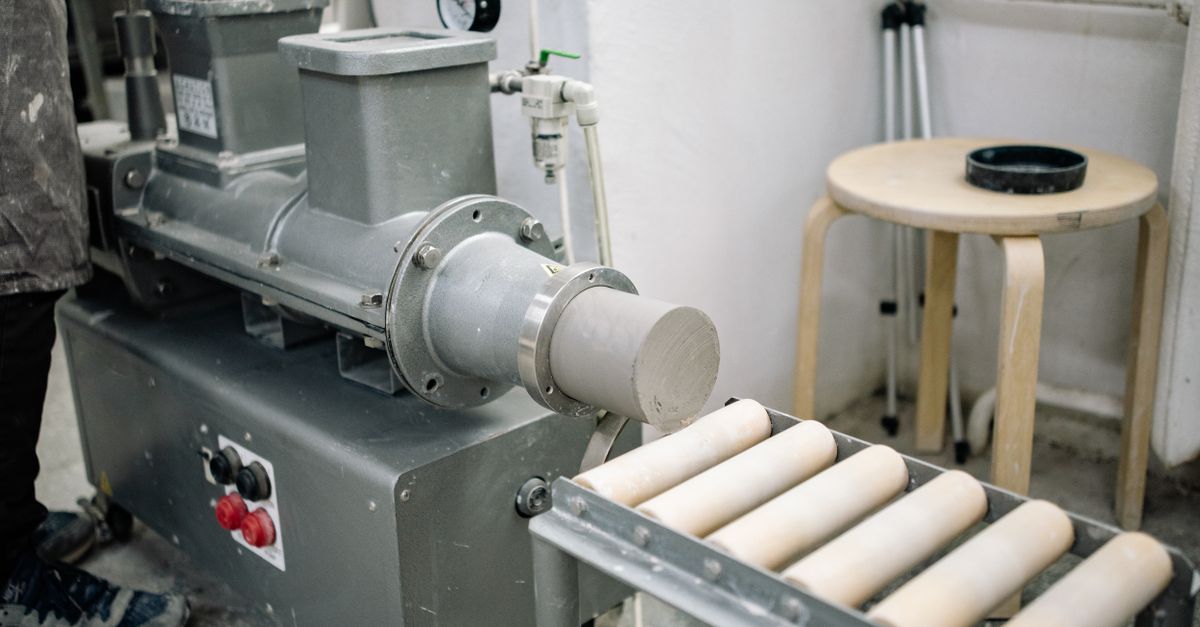
A machine delivered to the factory is not yet capacity available to serve customers. Between the purchase decision and usable production come specification, manufacturing, site preparation, transport, installation, training and performance verification. An investment schedule must connect these stages to a commercial need: how many conforming products must the business deliver, at what pace, and from which point in its operating plan? A conforming unit meets the agreed product requirements; a completed unit does not necessarily qualify.
Start with what the operation needs to deliver
This perspective prevents a costly assumption: treating the supplier's delivery estimate as the automatic start of cash generation. Equipment may arrive but remain idle because suitable power, tooling, a trained operator or sample approval is missing. Even a running machine may make products customers reject. The investment begins to address the business problem when installed capacity becomes approved output that is dispatched and subsequently paid for. These are separate events with separate dependencies.
Consider a hypothetical component manufacturer currently delivering 800 conforming units a week and seeking to deliver 1,200. The project replaces the existing 800-unit operation with a new production cell capable of at least 1,200 conforming units weekly: a net increase of 400. Old and new capacities are not added together to justify the target. First, however, the business must check whether the constraint is the machine, material supply, inspection or another process. Capacity purchased at the wrong point may simply increase work in progress.
State the objective in a verifiable sentence: replace the 800-unit operation with a cell delivering at least 1,200 conforming units weekly, within planned working hours and product specifications. Use it to guide requirements, budgeting and acceptance. Plan order continuity, the changeover interruption and the conditions for retiring the old solution. Every amount, duration and result in this article is a teaching assumption, not evidence of an actual operation or an indication of market prices.
Translate the production target into purchasing requirements
The specification must describe the work the equipment will perform: materials, dimensions, tolerances, product families, feeding conditions, changeover times and quality requirements. Record what the buyer will provide, including electricity, compressed air, foundations, network connections and tooling. A quotation listing only a model and maximum speed leaves undefined the conditions that determine factory performance. Clarify the interfaces between buyer and supplier before comparing technical claims.
In the example, the proposed cell has 40 scheduled hours per week and a nominal cycle of 1.5 minutes per unit. The theoretical weekly output is 1,600 units: 2,400 minutes divided by 1.5. For planning, the business assumes 90% availability, performance at 90% of nominal speed and a 97% quality rate. Multiplying 1,600 by 0.90, 0.90 and 0.97 gives approximately 1,257 conforming units per week.
This calculation supports a hypothesis that the 1,200-unit target is attainable, with limited headroom. It is neither a supplier promise nor verified production. Agree on definitions: which time belongs in availability, how minor stops affect performance, and how scrap is counted. Otherwise, apparently favorable indicators may coexist with inadequate deliveries. The roughly 57 units above the target offer little protection if assumptions worsen, the product mix changes or additional losses emerge.
Compare the cell with neighboring processes. If packaging and inspection can handle only 1,050 units weekly, the equipment purchase alone cannot deliver 1,200 finished, conforming units. Identify these dependencies and any necessary upgrades in the requirements document. Assess a complete production cell, including people, materials, handling and workflow. Advertised machine speed is one input to that assessment, not a substitute for checking the capacity of the whole route to dispatch.
Compare quotations using the same scope and evidence
Two quotations with identical prices may offer very different commitments. One may include fixtures, training and startup assistance; another may cover only the machine. Prepare one requirements list and ask every supplier to identify compliance, exclusions, assumptions and supporting evidence. Distinguish demonstrated capability from a modification still to be developed and from a feature that remains unverified. This makes the commercial comparison meaningful and exposes work the buyer would otherwise have to fund.
A demonstration is useful when it resembles the intended application. Ask which material and product were used, how long the run lasted and under what conditions it occurred. A short video showing a simple part does not establish continuous production with the buyer's raw material. If a representative test is not yet possible, record the evidence gap and agree how it will be resolved before a substantial payment or authorization to ship.
Compare offers against 1,200 conforming units within the example's 40 scheduled hours. A faster nominal cycle may come with lengthy changeovers or expensive consumables. A slower machine may still meet the volume with fewer interventions. Assess the product mix, operating effort and cost of maintaining quality. Include realistic changeovers rather than assuming the business will always manufacture the easiest item in one uninterrupted batch.
Separate mandatory requirements from preferences. Applicable safety requirements, product compatibility and acceptance criteria should not disappear to secure a discount. Finishes, accessories or additional capacity can be negotiated according to their usefulness. Put every material change into the final scope so that sales discussions, technical commitments and installation instructions remain consistent. A discount loses value if an omitted accessory later becomes essential to achieve the agreed output.
Build the schedule around milestones that authorize progress
A useful schedule identifies dependencies, owners and conditions for advancing. Labels such as purchasing, delivery and installation are too broad. Use observable milestones: approved specification, validated layout, released infrastructure, completed supplier test, checked physical receipt and completed assisted production. Each needs evidence of completion and a person authorized to acknowledge it. A milestone should describe an achieved condition, not merely a meeting or a percentage reported without support.
In the hypothetical schedule, week 0 covers contracting and configuration approval; week 2 brings an intermediate manufacturing check. Infrastructure work runs through weeks 1–4. The pre-shipment test and dispatch are planned for week 5, receipt and installation for week 6, training and startup for week 7, formal testing for week 8, and outstanding corrections and final acceptance for week 9. These weeks are relative planning intervals, not fixed promises.
The plan assumes enough space and utilities to keep the old operation running while the new cell is installed and tested. Definitive changeover follows acceptance, within a planned interruption window, with coverage for affected orders and a recovery plan if the transition fails. If temporary coexistence is impossible, revise timing, costs and customer supply arrangements before contracting. Removing the old machine early could eliminate the fallback that makes the reference schedule workable.
Confirm durations and dependencies: shipment follows a satisfactory agreed test; installation requires access and ready infrastructure; formal testing requires suitable instruments, raw material and trained people. Moving only the final milestone conceals the cause of delay. Include document-review turnaround: who reviews, how quickly and how questions are recorded. If a contract provides for deemed acceptance or consequences of silence, understand those effects before signing and organize reviews so opportunities to challenge a result are not missed.
Identify the critical path and give schedule buffers a purpose
The critical path comprises activities whose delay postpones operational readiness because they have no available schedule slack. It may run through machine manufacturing, an electrical upgrade or an imported component supplied by an integrator. Identifying it requires realistic durations and dependencies. A convenient task list cannot show which delay threatens completion. Recheck the path as evidence changes: the activity governing completion may shift during the project.
Suppose infrastructure is ready at the end of week 4 and the equipment arrives in week 6. That interval provides protection only if readiness includes inspections and corrections. Physical completion does not establish correct voltage, grounding, pressure, leveling or access. Allocate time for planned checks and keep the remaining buffer visible. Otherwise, a supposed contingency may already be committed to work that was omitted from the schedule.
Distinguish tasks that can run concurrently from those requiring a sequence. Work instructions and production-system records can be prepared during manufacturing. Final-product testing depends on the installed configuration. Early classroom instruction helps but cannot replace practice on the equipment. Overlapping work without respecting dependencies may create rework or unnecessary exposure for staff. Ask what information each activity needs before bringing it forward.
Update the schedule by comparing evidenced progress with planned progress. Asking whether everything is on time invites optimistic answers; checking approved drawings, received components and completed tests produces stronger evidence. When the critical path changes, adjust priorities and resources. Explain buffer consumption while options remain available. A buffer should protect an identified uncertainty, rather than silently absorb every delay until the planned completion point becomes unattainable.
Establish the installed budget and reserves for uncertainty
The machine price is only part of the resource requirement. Budget for equipment ready to operate, including transport, infrastructure, installation, training, tooling and qualification tests. Determine applicable taxes, insurance and other charges from the offers and the company's circumstances. The following figures are hypothetical consolidated cash outlays by category; they do not prescribe Brazilian tax treatment. Check the scope of each amount before relying on the total.
The example allocates R$ 240,000 to equipment, R$ 12,000 to freight, R$ 28,000 to infrastructure, R$ 16,000 to installation and training, R$ 14,000 to tooling, and R$ 10,000 to testing and qualification. Together, these total R$ 320,000. Describe what each category includes and which supporting records are required. No line should silently serve as a catchall for forgotten costs; an uncovered expense must be identified and assessed.
The business adds R$ 32,000 of contingency, equal to 10% of the installed budget, and sets aside R$ 48,000 for startup working capital. The total project envelope becomes R$ 400,000: R$ 320,000 of planned expenditure, R$ 32,000 of contingency and R$ 48,000 to sustain initial operations. Contingency is not compulsory spending. Working capital is not spare money for adding specifications. Keeping these purposes separate makes emerging shortages visible.
Give each reserve rules for use. An unforeseen installation adjustment may justify contingency; a voluntary expansion requires a scope decision. Test the R$ 48,000 against material purchases, payment obligations and customer receipts during startup. If it is insufficient, revise the funding plan before contracting. A convenient percentage cannot replace a cash forecast, and the fact that total funding equals R$ 400,000 does not establish that resources will be available when needed.
Turn the budget into a weekly cash requirement
A total investment figure does not reveal when cash must be available. The R$ 240,000 machine has five hypothetical installments: R$ 48,000 in week 0, R$ 72,000 in week 2, R$ 72,000 in week 5, R$ 24,000 in week 7 and R$ 24,000 in week 9. These represent 20%, 30%, 30%, 10% and 10% of its price. Link each installment to its contractual condition; a forecast week is not automatically an unconditional payment obligation.
Other planned outflows are R$ 14,000 for infrastructure in week 1 and another R$ 14,000 in week 3; R$ 14,000 for tooling in week 4; R$ 12,000 for freight in week 5; R$ 8,000 for installation and training in week 6 and R$ 8,000 in week 7; and R$ 10,000 for testing in week 8. Installed-budget expenditure therefore reaches R$ 246,000 cumulatively through week 5, R$ 254,000 through week 6 and R$ 320,000 through week 9.
Assume the R$ 48,000 of working capital is provided in three R$ 16,000 blocks in weeks 7, 8 and 9. The cumulative planned requirement, including these allocations, reaches R$ 302,000 at the end of week 7, R$ 328,000 in week 8 and R$ 368,000 in week 9. The separate R$ 32,000 contingency completes the R$ 400,000 envelope and remains reserved until its use is authorized. Validate the working-capital timing rather than treating this illustrative distribution as a spending forecast.
The curve exposes a significant risk: by week 5, R$ 192,000 of the machine price will have been paid before local performance has been demonstrated. Assess that exposure against available evidence and possible contractual protections. Match every outflow to funds actually available at that point. An expected later receipt cannot meet an earlier obligation, even when the overall project appears adequately funded. Timing can create a cash shortfall without changing the total budget.
Negotiate payments against verifiable deliverables
The supplier needs to fund materials and labor; the buyer needs a practical way to enforce the agreed delivery. Payment negotiations should recognize both interests and allocate risk explicitly. An advance may be commercially necessary, but understand its amount, purpose and treatment if work stops. Calling an installment a milestone payment adds little protection unless the milestone has verifiable content and the contract explains the consequences of noncompletion.
In the example, the week 2 installment could depend on a defined intermediate check, and the week 5 installment on a satisfactory pre-shipment test. The week 7 payment could relate to installation and startup training. Final payment could depend on final acceptance. These are possible negotiated arrangements requiring contractual review, not mandatory terms. They reduce some uncertainty but do not eliminate nonperformance risk or ensure that every dispute can be resolved promptly.
Define the response to partial delivery, technical reservations and delays attributable to either party. If an essential accessory is missing, the buyer needs to know which payments may be affected and what notice procedure applies. Withholding money without contractual grounds can create another dispute; paying everything while a defect remains unresolved may weaken practical negotiating power. Establish the procedure before either party faces pressure to improvise.
Consider contractual protections, warranty terms, support, spare-parts availability and termination arrangements. None ensures full recovery in every scenario, and additional mechanisms have costs, limits and enforceability considerations. A lower-priced offer may transfer most execution risk to the buyer. Compare that allocation alongside price, delivery estimates and assistance terms. A retained final installment is useful only within the broader contract and the supplier's practical ability to correct problems.
Release the site and assign operational responsibilities
Site preparation deserves its own plan. Check transport access, floor capacity, handling routes, maintenance space, utilities and applicable safety conditions against the contracted machine and current layout. Measurements taken for an earlier model or verbal statements about electrical demand can cause late modifications, extra costs and postponed installation. Confirm interfaces in writing and ensure that the people preparing the site receive the latest approved information.
Use a simple responsibility matrix. The buyer may own infrastructure and test materials, the manufacturer assembly and parameter settings, a specialist contractor heavy handling, and internal staff process integration. Assign a named owner and a substitute where needed. Multiple participants must not leave an interface without an accountable person. For example, someone must confirm that the transport route remains usable when the delivery actually arrives.
In the example, infrastructure release at the end of week 4 produces records of verified conditions and open items. Operations confirms access and flow; competent technical staff assess utilities; quality checks the measurement plan; finance follows approved expenditure releases. A small business may not have separate departments, but each function still needs someone with suitable competence and authority. Combine roles consciously rather than assuming that someone else has checked the requirement.
The investment sponsor resolves priorities and significant changes but should not override technical assessments to accelerate a launch. Purchasing tracks contracts and documentation; operators and maintenance staff participate in preparation and testing. Avoid concentrating procurement, inspection, payment authorization and acceptance in one person without review. In a small team, a second check at critical milestones improves traceability and helps identify assumptions that the person leading the purchase may have overlooked.
Use supplier testing to reduce shipment risk
A pre-shipment test, often called a factory acceptance test or FAT, can reveal problems while the equipment remains close to the team that built it. Agree its configuration, instruments, materials, samples, duration, criteria and records beforehand. It may demonstrate important functions and characteristics, but it does not necessarily reproduce the buyer's utilities, workflow or factory conditions. Its value depends on both the test design and an honest account of its limitations.
The example's week 5 FAT checks equipment identity, contracted configuration, specified functions, cycle time under declared conditions and conformity of representative samples. Record settings, quantities, failures and test limitations. If available material differs from the material intended for production, state that restriction and define a later step to resolve the uncertainty. Do not let a successful run with easier material silently become evidence for a more demanding application.
Approval with reservations requires classifying outstanding items. A defect preventing safe use, a missing essential function or an out-of-specification product is not an administrative detail. A documentation discrepancy may allow a different response if it does not prevent installation, operation or verification. Agree categories and consequences in advance. Pressure to dispatch should not change the criteria midway through a test or turn an unresolved essential requirement into a minor observation.
Shipment authorization should bring together the report, outstanding-item list, owners and correction deadlines. Preserve earlier records if a test is repeated and explain what changed. A failed result followed by an adjustment provides useful qualification evidence; removing the failure obscures recurring problems and the basis for assessing reliability. A corrected pass can support progress while still showing which issue requires monitoring during installation and local testing.
Separate physical receipt, installation and permission to test
Physical receipt confirms what arrived and its apparent condition, including identification, packages, accessories, documents and visible damage. It does not approve production performance. Staff receiving the shipment need to know which record to sign and how to report discrepancies under the applicable procedure. Internally, a delivery or unloading receipt should not become evidence that the machine satisfies the production process. Give these records distinct purposes and clear labels.
During week 6, the example team records arrival, checks components and supervises handling. It then verifies assembly, connections and prerequisites for installation. Photographs, serial numbers and item lists help resolve disagreements when stored under suitable access controls. Preserve a verifiable history without unnecessarily exposing private records or operational information. Documenting receipt is useful because later questions may concern damage, missing parts or configuration rather than measured performance.
Installation ends with a readiness review. Competent people examine applicable guards, interlocks, controls, utilities, identification and documentation within the agreed scope. Define intervention procedures and access conditions. Powering up does not establish readiness for production testing. A temporary connection or improvised adaptation must not quietly become the permanent arrangement. Record any temporary condition, its restrictions and the action required before the next authorized stage.
After technical release, week 7 startup allows adjustment and training under actual operating conditions. Record trials and material consumption without automatically treating their output as approved stock for sale. Update the documented configuration whenever startup changes are made. Before formal testing begins, everyone should know the equipment version, tooling and parameter settings being assessed. Otherwise, a later change may make it unclear whether production still matches the accepted condition.
Define technical acceptance that can be repeated and audited
Technical acceptance asks whether the solution meets contracted requirements under defined test conditions. A statement that it is working normally is insufficient. Specify product, material, working hours, staffing, duration, measurement method, limits and treatment of interruptions. The business should be able to repeat the procedure and explain the pass or fail decision. Creating criteria after seeing results encourages disputes and selective interpretation.
The example's site acceptance test, or SAT, covers three eight-hour shifts, totaling 24 scheduled hours. It requires at least 720 conforming units, availability of at least 90%, performance of at least 90% against the 1.5-minute nominal cycle, and scrap no higher than 3%. All criteria apply together. Meeting minimum volume does not waive the other requirements or excuse unsuitable operating conditions. The test assesses a defined combination of output, time use and quality.
Suppose the test records 800 units in total: 780 conforming and 20 scrapped, with 21.6 operating hours. Availability is 21.6 divided by 24, or 90%. Operating time is 1,296 minutes. Performance is 800 multiplied by 1.5 minutes, divided by 1,296 minutes, or approximately 92.6%. Scrap is 20 divided by 800, or 2.5%. All four quantitative criteria are met: 780 exceeds 720, availability reaches its minimum, performance exceeds its minimum and scrap remains below its maximum.
Approval still depends on other agreed checks, including tolerances, functions, documentation and applicable safety requirements. This test supports capacity under these conditions; it does not alone establish months of reliability or performance for every product. Later stabilization monitoring may be needed. Clarify the relationship among final acceptance, warranty and support, which are different obligations. Preserve raw counts and time records so a reviewer can reproduce the calculations rather than relying only on the reported percentages.
Connect startup to cash and test the commercial assumptions
Demonstrated capacity does not create demand. Assume the replacement preserves sales of the original 800 units weekly and the business sells all 400 additional units. At R$ 18 of cash contribution per additional unit after the variable costs included in the model, with contribution on the original 800 unchanged, the additional contribution is R$ 7,200 weekly. Subtract R$ 2,800 of net additional fixed operating outflows relative to the replaced operation. The hypothetical stabilized incremental operating surplus is R$ 4,400 per week.
This is not net profit, freely distributable cash or guaranteed capacity to service financing. It excludes financing effects, taxes not included in the modeled costs, future replacements and other relevant outflows. It also depends on selling, delivering and collecting payment for the assumed volume. State exclusions clearly. Comparing a partial operating surplus with a complete debt obligation would overstate the protection available to meet payments.
If customers pay four weeks after delivery, initial production consumes resources before collection. Test whether the R$ 48,000 working-capital reserve covers that interval alongside the business's other inflows and outflows. Forecast weekly materials, personnel, additional expenses and expected receipts. Unit contribution does not reveal cash tied up in stock and receivables. The timing of supplier payments matters as well: equal total margins can produce different funding needs when payment terms differ.
After definitive changeover, assume production and sales of 950 conforming units in one week, 1,050 the next and then 1,200. Above the original 800, the increases are 150, 250 and 400 units, contributing R$ 2,700, R$ 4,500 and R$ 7,200 respectively at R$ 18 each, before additional fixed outflows. Test output is not automatically commercial delivery, and losses during the changeover interruption belong in the cash forecast. Keep three hypotheses separate: the ability to produce, sell and collect. Each requires evidence and may fail even when the others hold.
Prepare for delays, inadequate performance and cash shortages
An adverse scenario should show consequences in sequence and identify responses. Suppose the pre-shipment test slips by two weeks. If installation and local testing depend on it and no time is recovered, acceptance moves from week 9 to week 11. Do not shift the entire financial schedule mechanically. Each payment follows its contractual condition, while some buyer expenses may already have occurred. Distinguish commitments that move from costs already incurred or still payable.
If the reference case included two weeks of stabilized operation, the R$ 4,400 weekly incremental surplus would not arise in that interval. The difference is R$ 8,800 against the reference case, not necessarily a direct cash outflow or permanently lost sales. Assess extra freight, idle staff and early purchases separately. Adding deferred revenue, lost contribution and costs without checking their relationships can count the same economic effect twice.
Now consider a SAT producing only 680 conforming units in 24 hours. Even if its other indicators are satisfactory, it misses the 720-unit minimum. Record the failure, investigate, correct and retest under the agreed procedure. The cause may lie in equipment, feeding or the working method. Assigning blame before reviewing records does not establish the cause or restore capacity. The response should identify what evidence would distinguish the competing explanations.
Track contingency consumption and the forecast cost to complete. An additional R$ 9,000 installation adjustment reduces the R$ 32,000 reserve to R$ 23,000. It does not authorize using the R$ 48,000 working-capital allocation without reviewing startup needs. Responses may include renegotiating timing, deferring a nonessential item or slowing initial production. Compare costs, operational effects and existing obligations. Show any remaining funding gap openly; moving money between categories cannot make the underlying requirement disappear.
Resolve disagreements through records and change control
Buyer and supplier may disagree about a problem's cause. The supplier points to raw-material variation; internal staff suspect machine settings. Turn the disagreement into testable hypotheses: separate batches, record parameters, check instruments and repeat a controlled condition. A signed report does not eliminate disagreement, but it preserves observations and reduces reliance on memory. Record both what the test establishes and what remains unresolved.
Scope changes require impact assessment. A product family added after contracting is not automatically covered by the original performance commitment. If a supplier proposes replacing a component, evaluate compatibility, maintenance, timing and effects on acceptance tests. Record the request, justification, price, responsibilities and approval before implementation, except for immediate measures needed to stop an unsafe condition. Update affected requirements so the parties evaluate the same revised configuration.
Manage internal conflicts as well. Production may want early commercial use, purchasing may prioritize closing the transaction, and the supplier may want final payment. Quality and technical staff need room to present findings without pressure to change criteria. Disclose commissions, paid referrals and relevant supplier relationships to decision-makers. These interests do not by themselves establish wrongdoing, but they can affect judgment and should be considered when reviewing recommendations and approvals.
Correct errors while preserving traceability. If a spreadsheet counted reworked units twice, retain the earlier version, explain the correction and recalculate indicators. If approval relied on an unsuitable instrument, reassess affected measurements. A documented correction is more useful than an apparently flawless dossier that conceals uncertainty. Identify which conclusions remain valid and which decisions need review. Link revised calculations to their source records so another reviewer can follow the change.
Close the project with records useful for operations and funding
Bring together final scope, installed configuration, test reports, training records, technical documents, warranties, outstanding items and follow-up owners. Compare budget with actual outflows by category and explain deviations. Record demonstrated capacity and its conditions. The expected 400-unit weekly gain remains a commercial hypothesis until routine production, sales and collections support it beyond the test result. Closure should leave the operating team with usable instructions and unresolved obligations clearly assigned.
These records help present a verifiable project to potential funders. KEZS connects entrepreneurial projects and potential funders through technology and intermediation. Clear objectives, milestones, costs and evidence can support analysis, while investors perform their own due diligence and make their own decisions. KEZS does not assign a credit score. Consistent documentation does not guarantee approval, repayment, profitability, liquidity or preservation of capital. Funders must consider costs, conflicts, uncertainty and possible loss alongside intended benefits.
Match the funding structure to the project. A loan creates debt. Receivables financing depends on existing eligible receivables, which differ from hoped-for sales. Equity and convertible instruments create distinct rights and may involve dilution; a MEI cannot admit equity partners while remaining a MEI. A donation to a nonprofit is neither equity nor a promised financial return. Public securities distribution and regulated financial activities require appropriate structures and providers. Technology or a CNAE business-activity classification is not regulatory permission.
Give each stage an owner, resources and evidence. Restrict private documents and share only what an authorized review requires. If blockchain records are used, integrity does not establish the truth of their contents, legal title, reserve solvency or payment guarantees. Private documents should not be placed on public blockchains. After acceptance, monitor conforming output, downtime, costs and cash. This follow-through helps identify when purchased capacity is becoming a financial obligation without the expected operational result.
Frequently asked questions.
Should lead time run from signing the purchase or from technical release?
Record both events and specify which starts each obligation. Signing may precede drawing approval or delivery of buyer-supplied samples. If manufacturing depends on those inputs, an undifferentiated lead time invites conflicting interpretations. The contract and schedule should identify starting conditions, each party's response time and the treatment of revisions. Internally, retain the complete investment timeline from decision to usable capacity so time spent before manufacturing remains visible. Distinguishing these clocks also helps explain why a supplier may meet its manufacturing commitment while the overall business project still finishes later than initially expected.
How should the changeover be planned while the old machine still needs to produce?
Treat transition as a project stage. Estimate the interruption and identify affected orders. Compare building a limited buffer stock, moving during a lower-demand window or temporarily keeping both solutions available where feasible. Each option carries space, material, staffing and operating risks. Retirement of the old machine should depend on explicit conditions, including demonstrated new-cell capacity and a realistic ability to resume the old operation if needed. Check whether the fallback is physically possible: disconnection, relocation or removal may make a nominal recovery plan unusable. Include transition costs and interrupted deliveries in the project forecast.
What if the supplier refuses to leave an installment payable after final acceptance?
Assess total exposure and negotiate other possible protections: a smaller advance, additional intermediate checks, evidence of components, specific support obligations or suitable contractual guarantees. Consider each mechanism's costs and limitations. If full payment precedes demonstrated local performance, make that exposure explicit in the purchase decision and supplier comparison. No retention does not prove a problem will occur, but it does mean understanding how much money is committed before final verification. Also examine the practical route to correction or recovery if the equipment fails, rather than assuming a written protection will produce immediate reimbursement.
Should used equipment undergo the same tests as new equipment?
Used equipment also needs receipt and acceptance criteria, but the plan must reflect its condition, available history and negotiated terms. Examine wear, maintenance, replaced parts, support availability and access to components. A one-off inspection may miss intermittent failures. If the seller does not warrant a particular performance level, document the limitation and estimate restoration costs before comparing prices. Do not automatically transfer a new machine's commercial promises or support arrangements to a used one. Define what the inspection actually established, which conditions remain uncertain and whether additional testing is needed before committing resources.
Can equipment be accepted with outstanding items?
Acceptance with reservations may be appropriate when the contract allows it and the open items do not prevent essential requirements from being met. Give each item a description, operational effect, owner, deadline and method for demonstrating correction. Clarify consequences for payment and contractual closure. An issue affecting safe use, required quality or minimum capacity should not be relabeled minor merely to finish the project. Obtain a competent technical assessment where needed and record the justification. Keep the list active until evidence closes each item; acknowledging a correction plan is different from confirming that the correction has worked.
How can a test avoid passing under conditions the business cannot sustain?
Use a configuration representative of routine work: planned operators, normal materials, available tools and feeding arrangements compatible with the process. Record extraordinary supplier assistance and assess whether it will remain necessary. A test requiring constant specialist adjustments may demonstrate technical potential without establishing operational independence. Address that gap through additional training, standardized instructions or further observation. Preserve the approved parameters and work instructions so staff can reproduce the condition. Also account for the resources used: extra people or unusual preparation can affect operating cost even when the measured quantity and quality pass.
Which records should be shared with a potential funder?
Begin with the production objective, categorized budget, milestone schedule, cash requirement, commercial terms and acceptance criteria. Add evidence proportionate to the review, clearly distinguishing a quotation, signed contract, completed test and expected result. Customer data, personal documents and sensitive industrial information require restricted handling and access based on need and authorization. Show costs, conflicts and loss scenarios alongside benefits. A clear presentation supports questions and due diligence; it does not replace independent verification or ensure funding. Share the status of the evidence honestly, including unresolved dependencies, rather than presenting planned capacity or forecast collections as accomplished results.
References and context
Institutional reference points for checking applicable rules and guidance. Calculations and scenarios are original examples, not quotes, historical results or individualized recommendations.
- Banco Central — correspondentes no País ↗
- CVM — Resolução 88, texto e alterações ↗
- CVM — Resolução 175, fundos de investimento ↗
- Portal do Empreendedor — perguntas sobre MEI ↗
- ANPD — orientações e perguntas frequentes ↗
AI-assisted educational content. Decisions require verification of the information, instruments and providers in each actual case.