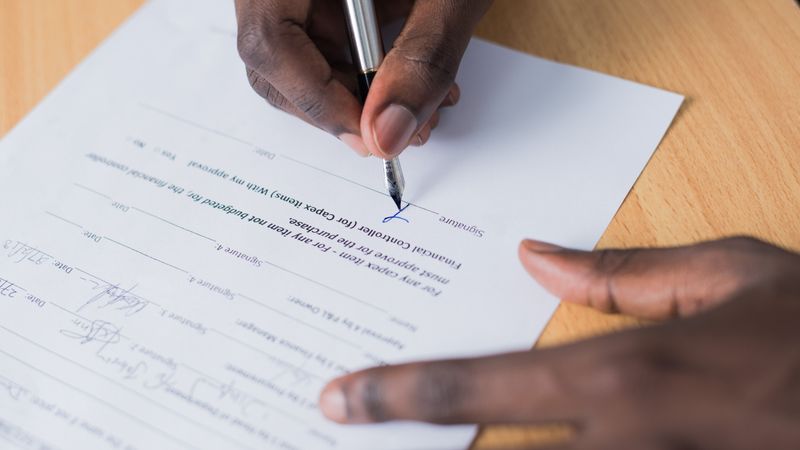
This financial education guide covers personal loans and individual budgets, a separate context from KEZS's focus on business projects. A personal loan gives you money now and commits part of your future income to repayment. Before opening a loan calculator, write down which expense you need to cover, how much it costs, when you need the money, and what happens if you wait. A repair you need to keep working, a purchase you can postpone, and a bill that goes unpaid month after month call for different decisions, even when the amount is the same.
Start with the problem the money needs to solve
In a hypothetical example, a self-employed worker needs to repair the motorcycle they use for work. The repair costs R$ 2,800. After setting aside enough to cover essential bills until their next payment comes in, they can put R$ 800 of their own money toward the repair. They need a loan that delivers R$ 2,000 net. If the contract quotes R$ 2,000 but the lender deducts a charge before making the deposit, they will come up short. If they can borrow R$ 3,000 net, the extra R$ 1,000 will also have to be repaid, along with the associated costs.
Factor in the cost of waiting. If being without the motorcycle for longer means paying for other transport or missing shifts, estimate each effect separately. For a missed shift, use the net income you would lose after subtracting any work expenses you would also avoid. If there is a temporary option, such as safely splitting the repair into stages or arranging payment terms with the repair shop, compare how much each option costs and when it will solve the problem.
If the expense recurs, put together next month's budget before applying. A household that already runs R$ 250 short each month and takes on a R$ 180 payment will face a monthly shortfall of R$ 430 if income and expenses stay the same. The deposit covers today's bill. To make the debt affordable, the budget for the following months needs a concrete change through additional income or spending reductions the household can sustain.
Find out how much of your income is already committed
Use the net income you actually have available. If you earn a salary, check the deductions on your payslip and the amount that reaches your account. If you are self-employed, separate business revenue from personal income. Money from sales may have to cover materials, transport, business fees, and payments to other people before any of it is available for household expenses. Transfers between your own accounts, reimbursements, and proceeds from new loans can all increase the money moving through your account without representing income.
List housing, food, transport, health care, essential services, and expenses for dependants. Add payments on existing debts and purchases you have already committed to, including those that appear only on your card statement. Also set aside money for predictable expenses that come up at irregular intervals. If a hypothetical bill of R$ 720 is due in six months and you still have all six months to save, set aside R$ 120 each month. The closer the due date, the more you will need to put aside each month.
Consider a hypothetical budget with R$ 3,600 in net income, R$ 2,550 in essential expenses, R$ 350 in existing payments, and R$ 200 set aside for upcoming expenses. That leaves R$ 500 before taking on a new loan. A payment of R$ 320 leaves R$ 180 to spare that month. The R$ 500 is what you have left under the assumptions in the budget. The R$ 180 is how much room you have to absorb a difference between what you planned and what actually happens.
When reviewing the budget, take care to count each expense once. If a payroll-deducted loan payment has already come out of your pay, your take-home figure already reflects it. If you recorded groceries and pharmacy purchases in their spending categories and paid by card, paying the statement in full settles those same purchases. Keep separate track of instalments on older purchases, charges, and financed balances, which can continue to consume income even after you cut current spending.
Test a lean month and check the days leading up to the due date
Return to the hypothetical budget with R$ 500 left over. If your income falls by R$ 200 and essential expenses rise by R$ 100, the amount available before the new loan falls to R$ 200. A R$ 320 payment puts you R$ 120 short that month. If the same thing happens for three months, the shortfall adds up to R$ 360 before any late charges. Savings of that amount would cover the gap for those three months. Check what else you might need those savings to cover over the same period.
If your income varies, reconstruct a lean month you have already experienced. Use the money you actually received then and recalculate expenses at the amounts you would pay in your own budget today. If your best months depend on seasonal orders, extra shifts, or commissions, treat that income as uncertain when deciding what fixed payment to take on. Consider what would happen if the drop in income lasted longer than it did before.
Your budget can balance for the month as a whole and still leave you short on the payment date. Suppose you have R$ 250 available when the payment is due and another R$ 600 comes in only a few days later. A R$ 320 payment leaves a R$ 70 gap on the day the money is due to come out. Check the order in which payments fall throughout the month and ask which due dates you can choose. If your income arrives in several payments, enter each expected receipt separately.
If the numbers work only when everything goes as planned, test changes that affect the budget. Borrowing less may leave some of the expense uncovered. Extending the term can lower the monthly payment and increase the total paid. Changing the due date can fix a timing gap while leaving a shortfall for the month as a whole. Distinguishing those effects helps you choose a change that addresses the problem you actually face.
Compare the loan with other ways to pay for the same expense
Ask the service provider or seller what terms they offer if you pay them directly. Check the price for paying in full upfront, the down payment, the total when paying in instalments, and when the service will be performed or the product delivered. To compare that offer with a loan, add the money you put in yourself to the total you would pay the lender. If there is a discount for paying in full upfront, use that price to work out how much you need to borrow.
In another hypothetical example, a repair costs R$ 2,400 if paid upfront. The shop offers a R$ 600 down payment and six payments of R$ 330, for a total of R$ 2,580. The customer has the same R$ 600 available and can get a loan that delivers R$ 1,800 net, with six instalments of R$ 320 and no separate charges. With the loan, the customer pays R$ 2,520 in all. To judge the R$ 60 difference, check when the work starts, when the payments fall due, and whether the funds will arrive by the shop's deadline.
If you can postpone the expense, work out how long it would take to save the money without borrowing. A purchase of R$ 1,800 takes six deposits of R$ 300, assuming the price stays the same and the savings earn nothing. If you need the service sooner, see whether you can pay for just the urgent part of the work. You will need an itemized estimate and, in the case of a repair, confirmation that it is safe to defer the remaining work.
For an overdue bill, start by comparing the arrangement offered by your current creditor. A smaller down payment can help when money is tight in the short term, while a discount for paying in full can reduce the total cost. Get both offers in writing, with the amounts and conditions. Check what happens if you miss a payment under the agreement, especially if keeping the discount depends on paying every instalment on time.
Understand what you commit to with each type of credit
With an unsecured personal loan, the lender assesses the application and sets the repayment terms. You can usually use the money for any purpose. Because you pledge no specific asset as collateral, the loan carries no claim against a particular asset under such a guarantee. The debt remains subject to the consequences for late payment that apply to the loan. An offer can be easy to sign up for and still be expensive. Review the full schedule of money coming in and payments going out before deciding how much the convenience is worth.
With a payroll-deducted loan, known in Brazil as consignado, the payment is deducted directly by the entity that pays your salary or benefit if you are eligible. This can improve the price of the loan and reduces the amount that reaches your household budget. Check how much income you will have after the deduction, and read what the contract says will happen if the source of payment changes or deductions stop. An automatic debit from your bank account works differently because collection depends on the balance or terms of the account on the payment date.
With a secured loan, you pledge property or another asset as collateral. The collateral may give you better borrowing terms, while valuation, registration, and other costs can reduce the savings. If you default, the lender may enforce its rights against the asset under the applicable conditions. If you rely on the asset for work or housing, consider the effect on your income or the cost of replacing it. Compare that effect with the amount the offer would save you in reais.
An overdraft facility, called cheque especial in Brazil, or revolving credit on a credit card may look like options because the credit is already visible in your account or on your statement. With an instalment loan, you can examine the payment schedule when you take it out. With a revolving card balance or an overdraft, the final cost also depends on how long the balance stays outstanding and whether you draw on the credit again. Compare the options using a plan that specifies when and how much you will pay to clear the balance, then see what happens if the income you expect arrives late.
Use the CET and the cash flows in reais to answer different questions
The interest rate describes what the lender charges in interest under the contract. For credit subject to Brazil's CET rules, the Custo Efetivo Total, or total effective cost of credit, expresses the cost of the scheduled cash flows as an annual rate. It uses the net amount disbursed and the exact dates of the payments. The applicable rule calls for including associated charges such as interest, taxes, fees, insurance, and other related expenses when they apply. Before signing, ask for the CET breakdown and check the net proceeds, the dates, and the amount of each charge in the offer. An advertised monthly interest rate and an annual CET are calculated on different bases.
Run the numbers in reais as well. Add the instalments and any charges you pay separately, counting each outgoing payment once. Compare what you will pay with the amount you actually have available for the expense. If a fee is deducted before the deposit, it already reduces the amount you receive. If it is financed, check how it is reflected in the instalments. If you pay it separately, record the outgoing payment on the day you pay it. When and how the charge is collected affects how much money you have on hand.
In a hypothetical offer, the loan is recorded at R$ 4,200, R$ 200 is withheld when it is disbursed, and R$ 4,000 reaches your account. You make ten payments of R$ 480, with no separate charges. You pay R$ 4,800 in all, which is R$ 800 more than the money you can use. Subtracting the recorded R$ 4,200 from the sum of the payments gives R$ 600 and misses the effect of the R$ 200 withheld. Adding the withheld amount to the R$ 800 already calculated from the net proceeds would count that charge twice.
The R$ 800 difference is a cost in reais. Calculating the CET also requires knowing when the money comes in and when each payment goes out. The amount in reais helps you assess the effect on your finances over the life of the loan. The CET helps you compare the financial cost of the different cash flows. If the contract uses a floating rate or an index that changes during the term, that reference rate or index is excluded from the CET calculation and must appear in the disclosure. Since it can change what you actually pay, apply the contract's adjustment rule to estimate the payments in reais. To estimate the cost of paying late, check the charges that apply in that situation separately.
Compare offers using the same net amount and the payment schedules
Ask for quotes that provide the same net amount, with the same term and due dates as close together as possible. Record the expected disbursement date, how long the terms are valid, each payment amount, the CET, any separate charges, and whether collateral or an additional service is involved. If an offer depends on an asset valuation or on verification of your details, flag that condition as pending. That way, you can distinguish confirmed terms from a quote that may still change.
Consider two hypothetical offers that both deliver R$ 3,000 net on the same day. Repayment starts on the same date for both, the monthly instalments are fixed, and there are no separate charges. Offer A calls for ten payments of R$ 350, totalling R$ 3,500. Offer B calls for fifteen payments of R$ 260, totalling R$ 3,900. The second offer lowers the monthly payment by R$ 90 during the first ten months, costs R$ 400 more in all, and leaves five payments due after the first loan would already have been paid off.
If your budget can cover only R$ 300 in a lean month, offer A exceeds that amount by R$ 50, while offer B leaves R$ 40 to spare. If another setback brings the money available that month down to R$ 230, even offer B would leave you R$ 30 short. The comparison shows what you would pay for some breathing room and how little room you might still have. To compare a third quote for a smaller loan, work out where you would get the money to cover the rest of the expense.
Also check for a grace period, a larger final payment, or an instalment that can change. A grace period pushes back the first due date and may come with costs during the wait. A large final instalment requires a source of funds you can draw on when it falls due. If the contract provides for adjustments, ask how they are calculated and model a scenario in which the payment rises. The first payment is a poor guide to affordability if the later payments are calculated differently.
See how the debt decreases over the life of the loan
Amortization is the part of a payment that reduces the principal balance. An instalment can include principal, interest, and other amounts specified in the contract. To see how much debt remains after you have made several payments, check how the outstanding balance changes over time. Subtracting everything you have paid from the amount originally borrowed usually gives the wrong answer because part of each payment went to interest or other charges.
In an example to illustrate the calculation, a debt starts with a balance of R$ 1,000 and is paid down in four principal payments of R$ 250. Assume hypothetical interest of 2% per period on the balance at the start of each period, with no other charges. Interest comes to R$ 20, R$ 15, R$ 10, and R$ 5, respectively. The instalments are R$ 270, R$ 265, R$ 260, and R$ 255. The total of R$ 1,050 consists of R$ 1,000 in principal and R$ 50 in interest.
After paying the first two instalments in this example, you will have paid out R$ 535. The principal will have fallen by R$ 500, leaving a balance of R$ 500, because R$ 35 went to interest. The two remaining instalments add up to R$ 515. That includes R$ 15 in interest scheduled for the remaining periods. A payoff statement from the lender takes into account the date you choose and the amounts due on that date.
In a contract with fixed instalments, the split between interest and principal can also change over time. If interest is charged on the outstanding balance and that balance falls, the interest portion of each payment tends to shrink, allowing more of the payment to go toward principal. If the contract describes the instalments as fixed while also listing charges that can vary, ask for a breakdown of the calculation. That helps you distinguish the loan payment from the additional amounts.
Assess whether to replace a debt using the payments still ahead
Before taking out another loan, get the payoff amount for the date you expect to settle the old debt. Ask for the remaining payment schedule and a renegotiation offer as well. Treat money that has already left your account as past spending. Today's decision is about what you would pay from here on if you kept the debt, renegotiated with the current creditor, or replaced the loan. The quoted payoff amount can differ from the sum of the remaining instalments.
Imagine a debt with eight monthly payments of R$ 410 left, for a total of R$ 3,280. The creditor quotes R$ 2,700 to settle it on the planned payment date. A hypothetical new loan deposits exactly R$ 2,700 net into your account so you can pay off the old debt. It requires ten monthly payments of R$ 305 with no other charges. Assume that its first payment is due on the same date as the next payment on the original debt. The new loan costs R$ 3,050 in all, a saving of R$ 230 against the original schedule. The monthly payment is R$ 105 lower, and the last payment falls two months after the last one would have fallen on the old loan. The calculation assumes the money arrives in time to settle the old debt for the quoted amount.
Now suppose the current creditor offers nine monthly payments of R$ 325, with no down payment or separate charges and the same first due date. The total would be R$ 2,925, which is R$ 125 less than the new loan. If you have R$ 315 available each month, the R$ 325 payment exceeds your budget by R$ 10. The R$ 305 payment leaves just R$ 10 to spare. In this case, the price difference matters, and the tight budget under both options gives you reason to negotiate payments you could keep up with in a tougher month.
If you consolidate several debts, list the contracts that will be closed, the payoff amount for each one, and who will make the payments. Confirm settlement through the previous creditors' official channels and keep the receipts. If a card limit or overdraft becomes available again, review your budget before using it. Running up a balance again while repaying the consolidation loan creates two obligations in the same month and changes the numbers that supported the decision to consolidate.
Understand what lenders look for when assessing credit
A lender may use your registration details, verifiable income, existing debts, payment history, and its own records to decide whether to offer credit, how much to offer, and on what terms. A credit score summarizes information used to estimate risk and can be one of the factors considered. Each lender decides how to use the available data for the type of credit involved. Two people with similar scores can receive different offers because of their existing commitments, the collateral, or the criteria applied.
Prepare your application so the information can be verified. Check your name, contact details, address, and who owns the account designated to receive the funds. If your income changed recently, find out what proof the lender accepts to document the change. Bank statements showing payments from customers can help a lender assess variable income. Identifying transfers between your own accounts and money received on behalf of others helps explain why total deposits are higher than what is left for household expenses.
A credit limit displayed in an app may be subject to further review or to conditions for that particular loan. Before relying on the money to complete a purchase, confirm the net amount, the steps still outstanding, how long the offer is valid, and when the deposit is expected. If the application is declined, check for missing documents or errors in your details. If the offer is for a smaller amount, revisit what you need to borrow and check whether the amount on offer is enough to cover the expense.
Distinguish between researching terms, running a simulation, and receiving a formal offer. Before submitting your details, check whether that step involves a credit or registration check, or permission to access financial information. Researching terms through verified channels helps you decide where to submit a full application. The impact of checks and applications depends on the assessment model used, so treat promises to raise your credit score for a fee with the same caution you would apply to a loan offer.
Send documents through the right channel and verify who will be party to the contract
A credit application may require an identity document, your CPF, which is your Brazilian individual taxpayer number, proof of address, bank account details, and proof of income. The list varies by lender and type of credit. Salaried workers can use payslips where accepted. Self-employed workers can gather bank statements, receipts, or other documents showing where the money comes from and how regularly it arrives. Ask for the list before sending files, and clarify what period and document format the lender requires.
Start with the institution's official channel and look it up independently of the advertisement or message you received. If an intermediary is involved, find out who receives your information, who reviews the application, who will be named as the creditor, and who will receive the payments. Verify the identity of the institution responsible and, where relevant to its activity, check its status through the public channels of the Central Bank of Brazil. Then confirm with the institution itself that the channel or intermediary is connected to the offer you received.
If you are asked to share financial data digitally, read which information will be shared, with whom, for what purpose, and for how long. Keep track of the permission through the official system where you granted it. Sharing data, signing a contract, and authorizing a debit are separate actions. Before approving each step, make sure the screen describes what you intend to do and that the transaction details match the offer you received.
Submit the requested material through a verified channel and share only the information needed for the stated purpose. Statements and identity documents contain data that can be reused in fraud. If someone asks you to forward a code received by message, install a remote-access app, or share your screen while opening your bank account, stop the interaction and check what is happening through an official phone number or app.
Spot fraud when funds are released or payments are collected
A scam can start with a message saying your loan has been approved and that you need to make a Pix transfer before the money can be deposited. The supposed charge might be described as a security deposit, account verification, insurance, or tax. If you receive such a request, pause the transfer and contact the institution through a channel you found independently. The contract may itemize charges that apply to the loan. A message asking you to pay to unlock the funds calls for a separate check with the institution named as the lender.
A trading name, logo, registration number, and professional-looking draft agreement can all be copied. Confirm the offer through the official channel and compare the creditor's details, the terms, and the transaction identifier. When paying a boleto, a Brazilian payment slip, or making a Pix transfer, check the recipient displayed by your bank. If the name differs from the one in the contract, verify the payment request through the official channel before completing the transaction. Do the same for payoff offers and settlement agreements sent by message.
Fraud can also show up as a loan you never applied for. If you see an unexpected deposit, a payment you do not recognize, or a notice that a loan has been taken out, report it to the institution through an official channel. If someone offers to fix the problem by having you return the money to an account sent in a chat, wait for the procedure verified by the institution. Keep statements, messages, and case reference numbers so you can reconstruct what happened if you need to dispute the loan.
If a suspicious transfer has already gone through, contact the institution that holds the account used to pay and the institution named in the supposed offer as soon as possible. Provide the date, amount, and transaction identifier, and ask how to dispute the transfer and secure access to your account. Keep the messages and proof of payment. Whether the money can be recovered depends on the circumstances, so report what happened and follow up on the case even if the person who requested the payment disappears.
Read the contract for what comes in, what goes out, and what can change
Check that the document identifies the parties, the contracted amount, the net amount you will receive, the destination account, the CET, and how payments will be collected. Compare the contract with the offer you saved. Verify the number and amount of the instalments, the first and last due dates, and any charges paid separately. If the interest rate or payment can change, find the adjustment factor, how often it applies, and which part of the balance or payment it affects.
Look for any insurance or related service. Find out what it costs, whether it is paid upfront or financed, how long it lasts, and what the cancellation terms are. With credit protection insurance, known in Brazil as seguro prestamista, read which events are covered, which are excluded, and how you would file a claim. Losing income, having your hours reduced, and becoming unable to work are different events. The effect on your debt depends on the coverage you take out.
Read the late-payment terms, the order in which charges are collected, and what can happen to any collateral. If payments are made by automatic debit, check which account will be used and what happens if its balance is too low. For a secured loan, look for the terms governing release of the asset once you have paid off the debt. If there is a guarantor or another person liable for the debt, they need access to the document and need to understand when they could be called on to pay.
Before signing electronically, check what the button or code authorizes and whether the displayed version is the same one you reviewed. If a representative promised a term that is missing from the document, ask to have it included in the final version. Keep the offer, the signed contract, and the CET disclosure. If the deposit or a later charge differs from what you agreed to, these records help you identify precisely what needs to be corrected.
Plan the first payment and track the outstanding balance
If you took out a loan that pays into your account, check how much arrived and compare it with the net amount in the contract. Pay the expense that prompted the loan and keep the receipt. If you are responsible for using the money to settle other debts, confirm that the creditors credited the payments and check whether any balance remains. If the deposit comes in after the payoff quote expires, ask for an updated amount before transferring the money. In a formal loan transfer under Brazil's credit portability process, the new lender sends the funds directly to the original creditor. Follow up through the institutions' official channels for confirmation that the old debt was settled.
Enter the first payment date and all subsequent due dates in your budget calendar. For automatic debit, check your account balance ahead of time and confirm that the payment went through. If you pay by boleto, use the official channel to generate the payment slip. If you pay another way after a failed debit, check whether the lender will try the debit again. This helps you avoid paying twice and distinguish a collection problem from a shortfall in your budget.
After paying, review the loan statement and your account statement. If a new fee, duplicate charge, or unexpected instalment amount appears, identify the entry, ask for an explanation, and get a case reference number. If a payment you made still appears outstanding, send proof through the designated channel and follow up until the record is corrected. Keeping track also helps you verify the balance if you decide to pay early.
Review your budget when an old instalment plan ends or an expense changes. If your income falls, recalculate what you will have available on the next due dates while there is still time to talk to the creditor. If extra money comes in, compare the savings from paying down principal with the need to keep cash for upcoming expenses. An early payment can reduce your debt and immediately leaves you with less money available for emergencies.
Assess early repayment by what you save and how much cash remains
Ask for a quote for paying off the loan or paying down principal on the date you intend to make the payment. In consumer credit transactions, early repayment entitles you to a proportional reduction in interest and other applicable charges. The exact amount depends on the balance, the charges that still apply, and the date of payment. Compare the quoted amount with the instalments that have yet to fall due, and ask for a breakdown of the calculation if the difference is hard to understand.
In a hypothetical scenario, six payments of R$ 210 remain, adding up to R$ 1,260. The lender quotes R$ 1,130 to settle the loan on a specific date. You would save R$ 130 on scheduled payments by paying R$ 1,130 now. If you have R$ 1,500 available, you would have R$ 370 left. If an essential expense of R$ 600 falls due before your next income payment, you would be R$ 230 short, assuming this is all the cash you have available.
If you want to repay only part of the debt early, ask for a revised schedule and check how the payment reduces the balance. For some loans, you can request calculations for shortening the term or lowering the instalment. A shorter term tends to cut more interest because the balance is repaid sooner. A lower instalment can ease pressure on your budget in the coming months. Compare both scenarios using the same upfront payment and check how much cash you have left after each.
Once the loan is paid off, keep the receipt and confirm closure through the lender's official channel. If there is collateral, ask how to have it released and follow up until the process is complete. If payments were taken through payroll deduction or automatic debit, check the next payment cycle. Keeping the closure confirmation and payment records makes it easier to correct a charge that appears later.
If payments become difficult, negotiate an amount you can keep up with
If you expect to be short on the due date, redo your budget and contact the creditor through an official channel. Work out how much you can pay after essential expenses and when you next expect income. You can then evaluate a different due date, an agreement with a down payment, or another offer. If the problem keeps recurring, moving the due date can buy time, and the payment still needs to fit your income in the months ahead.
Compare renegotiation offers with the same care you gave the original contract. In a hypothetical example, the creditor offers a R$ 200 down payment followed by eight payments of R$ 280, totalling R$ 2,440. Another option requires no down payment and charges twelve payments of R$ 230, totalling R$ 2,760. The second option costs R$ 320 more. If the first instalment on the offer with a down payment is also due in the month you sign the agreement, you will pay R$ 480 that month. Confirm the dates before deciding whether you can afford the offer.
Ask for written confirmation of the balance used in the agreement, the charges included, how each payment will be applied, and the consequences of paying late. Before making a one-off payment, confirm whether it reduces the balance, settles an instalment, or forms part of a formal agreement. The distinction matters because a transfer may be insufficient to bring the account up to date. If the offer includes a conditional discount, find out under what circumstances you could lose it.
If you owe several creditors and the combined payments leave too little for basic expenses, gather your contracts, account statements, essential bills, and any offers you have received. Consumer protection bodies such as Procon, or the Defensoria Pública, Brazil's public defender service, may be able to advise on dealing with over-indebtedness and on ways to negotiate, depending on the assistance available. If the issue is a charge that differs from what you agreed to or a loan you do not recognize, identify the disputed transaction and keep the case reference numbers so you can follow up.
Make the decision using the figures in the final offer
Make a record you can understand after closing the app. Write down the expense you need to cover, the net amount you will receive, the total you will pay, the CET, the dates the money comes in and payments fall due, and what you would have left in a lean month. Include the risk specific to that type of loan, such as reduced take-home income with a payroll deduction, an asset pledged as collateral, or a payment that can vary. If any figure still depends on the lender's review, make your decision conditional on confirmation.
Consider one last hypothetical example. You need R$ 2,000 net to cover the expense, and in a lean month you have R$ 290 available before taking on the new loan. An offer of eight payments of R$ 290 adds up to R$ 2,320 and uses everything you have left that month. Another offer, with ten payments of R$ 245, adds up to R$ 2,450 and leaves you R$ 45. If an additional essential expense of R$ 100 comes up that month, you will be R$ 100 short under the first offer and R$ 55 short under the second. The extra R$ 130 in total cost buys some room in the monthly budget, and that room can still run out.
In that situation, check whether you can split the expense into stages, arrange to pay the provider directly, or get a smaller loan that covers the urgent part. If the obstacle is the disbursement date, confirm the timing with the lender and whoever is due to receive the payment. If the instalment is more than you can afford, go back to your income and spending. Working through each constraint separately helps you avoid taking on a long-term debt just to resolve a mismatch in payment dates.
Before signing, check that you can use the contract to answer how much you will receive, how much you need in your account on each due date, and what happens if you pay late or decide to pay off the loan early. Finally, confirm that the money covers the expense you identified and that the payment fits the months you can reasonably plan for. If a decisive detail is missing or the numbers work only if uncertain income comes through, waiting to sign keeps the option to negotiate open.
Frequently asked questions.
Can I apply for a personal loan without a formal employment record?
It depends on the lender's criteria. Bank statements, receipts, and other accepted documents can help you show that you earn income regularly even if you lack a formal employment record in Brazil. Group incoming payments by source and show how much remains after the expenses you incur to do the work. To decide what instalment you can afford, model a month with lower revenue and see whether the due date falls while you are still waiting for customers to pay.
Does a negative entry on a credit register prevent me from getting a loan?
The entry can affect which offers are available and what they cost, depending on the lender and the type of credit. First, check whether the entry relates to a debt you recognize and whether there is an error to correct. If your goal is to resolve that debt, compare an agreement with the current creditor and the new offer. Include everything you would pay and check how the old obligation would be closed. Be wary of transfer requests that claim to unlock a loan that has supposedly already been approved.
Does the lowest CET always mean I will pay less overall?
The CET compares financial cost as an annual rate, taking into account when money comes in and goes out. A longer loan can have a lower CET and a higher total cost in reais because the debt stays outstanding for longer. Put the net amount, the CET, the sum of everything you will pay, and the payment schedule side by side. Offers with equivalent amounts, terms, and dates make the difference easier to interpret.
Can a grace period help if my income will arrive later?
It can help align the first payment with the income you expect. Ask for the full schedule and find out whether interest accrues during the grace period, how it is charged, and whether the balance will grow during that time. Compare it with an offer that simply lets you choose a different due date. If the expected income depends on a sale, a commission, or a customer payment, also work out what would happen if the money were delayed again.
How do I compare an offer with insurance and one without it?
Ask for both versions using the same net amount and payment schedule. Compare the premium, the coverage, excluded events, who receives the payout, and the cancellation terms. If the premium is financed, check how much it adds to the instalments and the total paid. If the lender makes credit conditional on having insurance, ask for that condition in writing and check the rules that apply to the loan to see whether you can decline the insurance or provide equivalent coverage from another insurer. The lender cannot require you to buy the insurance from the lender itself or from an insurer it designates.
What is the difference between transferring a debt and taking out another loan to pay it off?
Under Brazil's formal credit portability process, you apply to the institution you want to move the debt to. That institution transfers the amount needed to settle the previous contract directly to the original creditor. If you take out a new loan that pays into your account, you may be responsible for paying off the old debt yourself. If a combined offer includes refinancing or additional credit, ask the institution to itemize the balance transferred through portability and to set out separately the net amount, CET, and total payable for each agreement. Any additional amount deposited into your account belongs to the separate agreement. After the transfer or payment, confirm that the old debt has been closed.
If I have money left over, should I pay the next instalment early or pay down the balance?
If your goal is to reduce the debt, ask for a calculation showing how the money available would reduce the principal and compare it with paying the instalments identified by the lender ahead of schedule. Check the reduction in future charges, the balance after payment, and whether the transaction changes the instalment amount or the remaining term. Before paying, set aside what you need for upcoming due dates and essential expenses.
What should I do if I signed and the deposit was smaller than agreed?
Compare the deposit with the net amount in the contract and the breakdown of charges. If they differ, contact the institution through an official channel, provide the offer, the contract, and proof of the deposit, and ask for an explanation or correction in writing. Record the case reference number and confirm how the upcoming payments will be handled while the issue is under review. If the initial contact does not resolve it, use the institution's ombudsman channel, known as the ouvidoria, or seek guidance from a consumer protection body.
References and context
Institutional reference points for checking applicable rules and guidance. Calculations and scenarios are original examples, not quotes, historical results or individualized recommendations.
- Código de Defesa do Consumidor, arts. 39, 52 e 54-B ↗
- Banco Central — Resolução CMN 4.881 ↗
- Banco Central — Resolução CMN 5.004 ↗
- Banco Central — Resolução CMN 5.057 ↗
- STJ — Tema Repetitivo 972 ↗
- Banco Central — Encontre uma instituição ↗
- Banco Central — Alerta sobre depósito para obter empréstimo ↗
AI-assisted educational content. Decisions require verification of the information, instruments and providers in each actual case.