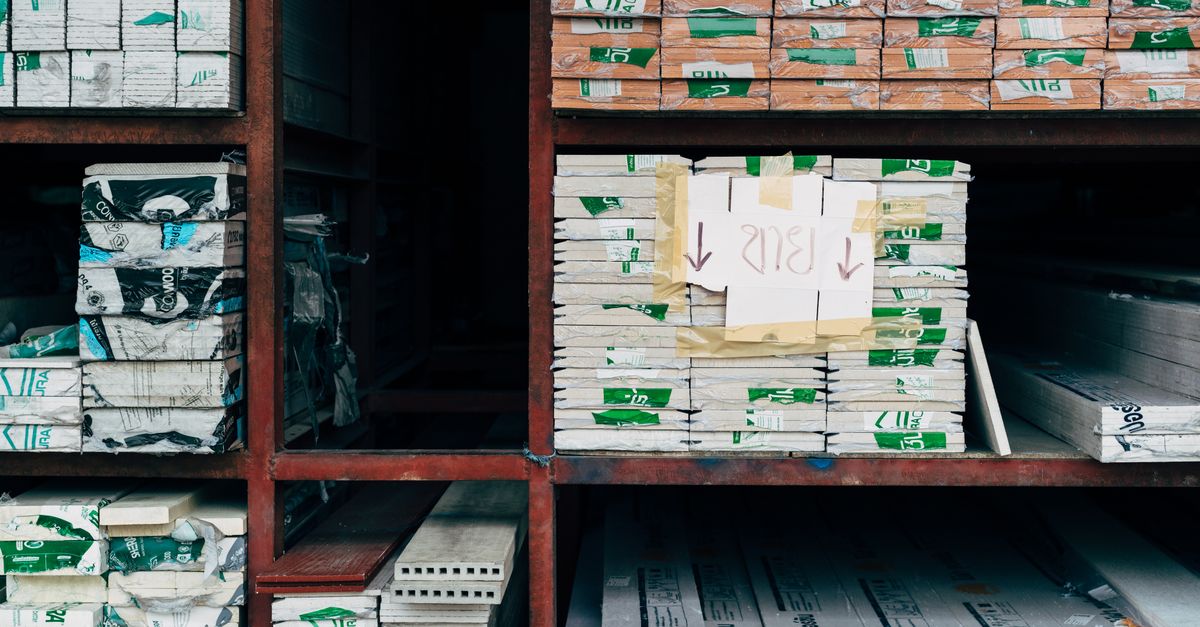
When an entrepreneur seeks funding to replenish inventory, buying the goods often receives most of the attention. Selecting a supplier, negotiating a discount and stocking the shelves can seem like the whole task. In practice, monitoring has only begun. Money becomes merchandise, may then become a credit sale and only later returns as cash. Some value may be lost through damage, discounts, returns or products that customers no longer want. Each transition needs a verifiable trail.
Following the money means following the goods
An inventory count establishes what exists, including quantity, location and condition for use or sale. Reconciliation compares records that should explain the same movement. Physical stock must agree with inventory records; incoming goods must match purchase and receiving documents; outgoing goods must match sales and other removals; and financial receipts must match funds actually available. A closing balance can look correct even when the transactions behind it contain errors or offsetting mistakes.
For a funded inventory project, these checks should answer a practical question: is the capital improving the business's ability to meet demand, or merely increasing the value tied up in goods? A warehouse photograph or a month's revenue cannot answer that alone. The assessment requires a reliable opening balance, purchases, the cost of goods sold, payment and collection schedules, and losses. The purpose is to turn a purchasing intention into a project whose progress can be explained and whose problems can be addressed.
Define the project before calculating purchases
An inventory replenishment project needs a clear operational scope. It might cover one product line, one store, a sales campaign or a particular combination of suppliers and customers. Identify the problem: are popular items unavailable, has the supplier increased its minimum order, has replenishment become slower, or does expected demand exceed available stock? Each problem calls for a different response. Buying more of everything can tie up additional capital while leaving the actual shortage unresolved.
Record the monitoring period, eligible products, permitted uses of funds and conditions that would justify stopping further purchases. Separate spending on goods from freight, storage and other necessary expenses. Document any flexibility to move money between purposes. A phrase such as 'strengthen inventory' does not establish whether funds may settle old expenses, replace losses or support credit sales. That ambiguity can create conflict when cash becomes tight, particularly if the business and funder understood the purpose differently.
KEZS connects entrepreneurial projects and potential funders through technology and intermediation. A clearly defined, documented project can make an assessment easier to understand, while investors remain responsible for their own diligence and decisions. The business must explain its assumptions and records. Providing documents does not mean automatic approval, a credit score assigned by KEZS or proof of an operational platform capability that has not been demonstrated. Documentation supports scrutiny; it does not settle the funding decision.
Establish a defensible opening balance
Before forecasting purchases, verify the starting position. Give each product a unique code, description, unit of measurement and location. A box containing ten units cannot be entered as one unit in one record and ten in another without an explicit conversion. Distinguish sizes, models and compositions as well. Similar-looking goods can have different costs, demand patterns and substitution possibilities. If product records are inconsistent, a carefully calculated purchasing plan may still be based on the wrong quantities.
The count must establish more than how many items are present. Separate available goods from reserved, damaged or expired goods, where applicable, as well as returns and goods owned by third parties. A reserved item may be physically in the store but unavailable for another sale. Goods held elsewhere may belong to the business despite being absent from its warehouse. Treating every category as freely available creates fictitious capacity and can lead to emergency purchases or customer promises the business cannot fulfill.
Choose a cutoff point and record movements around the count. If sales continue, specify how those movements will be incorporated so quantities from different moments are not compared. Independently recount material discrepancies and retain the balance recorded before any adjustment. Reconciliation does not mean changing the system until it matches the warehouse. Each adjustment should explain its reason, supporting evidence, approving person and effect on the inventory value originally presented in the project.
A discrepancy changes the investment's starting point
Consider a hypothetical Brazilian store selling irrigation components. Its project covers connector A, valve B and timer C. Their assumed acquisition costs are R$ 20, R$ 50 and R$ 100 per unit, respectively. For this example, those figures already include the acquisition expenses incorporated into inventory cost. The system shows 300 connectors, 120 valves and 40 timers. The recorded values are R$ 6,000, R$ 6,000 and R$ 4,000, producing a total inventory balance of R$ 16,000.
The physical count finds 285 connectors, 110 valves and 36 timers available. Checking movements around the cutoff confirms shortages of 15, 10 and 4 units against the records. At the assumed costs, those differences are worth R$ 300, R$ 500 and R$ 400. Reconciled physical inventory is therefore R$ 14,800, a reduction of R$ 1,200. Finding fewer goods is an established counting result. Attributing the shortage to theft, damage or a recording failure still requires investigation; the adjustment alone does not establish the cause.
This changes the discussion about capital. After confirming only R$ 14,800 in goods, the store cannot continue presenting R$ 16,000 as available inventory. Nor should it conceal the R$ 1,200 difference within an ordinary expansion requirement. Here, the discrepancy is recognized at opening, before the projected cycle, and remains visible in the history. Subsequent monitoring starts with corrected quantities. Better sales later will not erase the earlier discrepancy, and a fresh loss will not disappear inside an inaccurate opening balance.
Turn demand into explicit product assumptions
For the next four weeks, the store expects to sell 240 connectors A, 80 valves B and 20 timers C: weekly averages of 60, 20 and 5 units. Hypothetical selling prices are R$ 35, R$ 85 and R$ 160, respectively. If every projected sale occurs without discounts or returns, revenue will be R$ 8,400 from connectors, R$ 6,800 from valves and R$ 3,200 from timers, totaling R$ 18,400. These are demand and price forecasts, not completed sales or confirmed collections.
A defensible forecast combines historical sales, inquiries and orders, seasonality, and known business changes. History needs interpretation: low sales during a stockout do not establish weak demand, and strong promotional sales do not establish recurring demand. This store should distinguish ordinary business from an exceptional maintenance order and check whether a customer who regularly bought valves remains active. An average is useful only when the team understands the events it summarizes and the circumstances that may not repeat.
Document a central forecast and the reasons it could fail. Keep confirmed orders, buying intentions and general inquiries in separate categories rather than adding them as equally firm demand. Sales staff can provide early signals but must also report cancellations and promised discounts. Monitoring should compare actual performance with the original assumptions and explain differences in volume, price, timing or product mix. Retain the original version when updating the forecast so that a revised expectation does not conceal an earlier forecasting error.
Calculate purchases from availability and target coverage
The basic calculation for each item is desired closing stock plus expected outflows, minus available opening stock and confirmed incoming deliveries. Adjust it for reservations, minimum order quantities and lead times. In this example, no earlier purchases remain due for delivery. The store wants to finish the four weeks with 120 connectors, 40 valves and at least 10 timers. For A, the calculation is 120 plus 240 minus 285, requiring 75 units. For B, it is 40 plus 80 minus 110, requiring 10 units.
For C, the calculation is 10 plus 20 minus 36, giving minus 6 units. This means the forecast requires no timer purchase; it does not automatically sell the six units above the target. The replenishment proposal is 75 connectors at R$ 20 and 10 valves at R$ 50, totaling R$ 2,000. After projected sales, closing stock will be 120 connectors, 40 valves and 16 timers. Its expected cost value is R$ 2,400 plus R$ 2,000 plus R$ 1,600, or R$ 6,000.
Coverage helps interpret the plan. Opening quantities represent 4.75 weeks of average forecast demand for connectors, 5.5 weeks for valves and 7.2 weeks for timers. Product C has more headroom, so spreading the purchasing budget equally across products is not justified. Coverage is not an assurance of availability, however: a concentrated order can quickly consume stock. Check order distribution and realistic substitution options before treating a weekly average as a dependable sales rhythm. Units above a target still require an active decision about holding or selling them.
Align replenishment lead time with the purchasing plan
The R$ 2,000 order is placed at the start of week one and arrives at the beginning of week three. The supplier requires half on ordering and half on delivery. Under the assumed sales pattern, the store sells 120 connectors and 40 valves during the first two weeks, leaving 165 connectors and 70 valves before replenishment. Delivery adds 75 and 10 units, raising those balances to 240 and 80. Sales during the final two weeks then produce the planned closing quantities of 120 connectors and 40 valves.
This schedule works under the assumed rhythm; it does not prove that the order size or timing is optimal. Compare smaller orders, split deliveries and purchases closer to consumption. Each changes cost, supplier exposure and cash requirements. Buying earlier provides protection against some delays, while waiting preserves cash for longer. The choice depends on the cost of a stockout, demand stability and supply reliability. A verbal delivery promise should remain an identified risk rather than being treated as certain availability.
A reorder point should reflect consumption during the replenishment lead time and a buffer consistent with uncertainty. Different products need not have identical buffers. An inexpensive connector essential to several services may warrant a different policy from a costly timer with irregular demand. Explain how lead time is measured, including receiving checks and release for sale. Goods that have arrived but remain blocked because of model or quantity discrepancies have not yet resolved the operational need. Their physical presence should not be confused with usable replenishment.
Reconcile the full cycle from purchase to collection
Every incoming delivery should connect the approved order, purchase document, physical receipt and payment. This exposes problems a bank statement cannot show. Paying R$ 2,000 proves an outflow of money; it does not prove that 75 correct connectors and 10 correct valves arrived. Receiving records should identify quantities accepted, condition and discrepancies. If part of a delivery is rejected, inventory and the amount owed to the supplier must reflect what was accepted and the agreed treatment of the remainder.
For outgoing goods, connect the sale, picking, delivery, stock reduction and financial terms. An order canceled before dispatch should not permanently consume inventory. A returned item does not necessarily become available immediately because inspection may be needed. Fees, allowances and offsets can also make the amount collected differ from the amount invoiced. Financial reconciliation should explain these differences. Deleting records or posting an unexplained expense merely to force agreement removes the information needed to understand what happened.
Use identifiers that allow each operation to be followed, even when the business begins with simple spreadsheets. Do not count a purchase twice because it appears in both a purchase document and a bank statement. Distinguish an order placed, goods received, a liability recognized and a payment made; these may occur in different weeks. Checking each event helps reveal both payment without receipt and receipt without payment. Those situations have different effects on stock, cash and the remaining capital requirement, so they need different responses.
Cash requirements differ from the purchase amount
The store begins with R$ 3,000 in cash and wants to preserve an operating minimum of R$ 2,500. To make the example traceable, assume evenly distributed sales and immediate collection of half of every sale. The other half is collected only after the four-week period, with no delay under this assumption. Cash receipts are therefore R$ 2,300 per week, totaling R$ 9,200. There are no opening receivables due for collection. Operating expenses are R$ 2,000 weekly, recognized and paid within the same period.
Week one closes at R$ 2,300: R$ 3,000 plus R$ 2,300, less R$ 2,000 in expenses and the R$ 1,000 supplier deposit. Week two closes at R$ 2,600. In week three, R$ 2,300 comes in while R$ 2,000 in expenses and the remaining R$ 1,000 purchase payment go out, reducing cash to R$ 1,900. Week four closes at R$ 2,200. The lowest balance is R$ 600 below the minimum. An additional R$ 600 at the start would produce weekly closing balances of R$ 2,900, R$ 3,200, R$ 2,500 and R$ 2,800.
The goods cost R$ 2,000, but the shortfall against the chosen minimum is R$ 600 because existing cash and customer collections also finance the cycle. This simplified calculation excludes taxes, financing charges and other cash flows; it must be rebuilt using actual commitments. Weekly closing balances can also conceal a shortage within a week. If the supplier must be paid before customer collections arrive, the requirement rises. The R$ 600 is a planning result under stated assumptions, not an automatic recommendation to raise that amount.
Distinguish goods sold, revenue, cash and profit
Projected sales consume R$ 4,800 in connectors, R$ 4,000 in valves and R$ 2,000 in timers, producing R$ 10,800 in cost of goods sold. Inventory reconciles as R$ 14,800 at opening, plus R$ 2,000 in purchases, minus R$ 10,800 in goods sold, leaving R$ 6,000. Revenue of R$ 18,400 less that cost produces gross profit of R$ 7,600. This amount is neither cash collected nor the business's net profit. Inventory records, sales records and cash records explain different parts of the same cycle.
Hypothetical operating expenses total R$ 8,000, so the simplified cycle result is a loss of R$ 400 before the excluded items. The opening R$ 1,200 discrepancy was treated separately and is not included in this projected result. Even if demand meets the forecast in full, the operation does not cover the expenses considered. Revenue alone therefore cannot justify the purchase: selling R$ 18,400 does not demonstrate sufficient resources to provide a return on capital or service an additional obligation.
Without extra funding, closing balances are R$ 2,200 in cash, R$ 9,200 in receivables and R$ 6,000 in inventory, totaling R$ 17,400. Reconciled opening balances were R$ 3,000 in cash and R$ 14,800 in inventory, totaling R$ 17,800. The R$ 400 reduction agrees with the simplified loss. If the additional R$ 600 enters, the closing total becomes R$ 18,000. That increase comes from financing, not profit. The funding arrangement determines its corresponding accounting treatment, rights and obligations; receiving money does not establish that the business earned it.
Test weaker demand and delays without concealing losses
Suppose the store makes the planned purchase but sells only 180 connectors, 60 valves and 15 timers, a uniform 25% volume decline. At unchanged prices, revenue falls to R$ 13,800 and cost of goods sold to R$ 8,100. Gross profit becomes R$ 5,700. With the same R$ 8,000 in operating expenses, the simplified loss is R$ 2,300. Closing inventory rises to R$ 8,700: R$ 14,800 plus R$ 2,000 minus R$ 8,100. More goods left at the end do not represent better performance in this scenario.
If half of sales are still collected immediately, only R$ 6,900 enters during the cycle. Without new funding, closing cash is negative R$ 100: R$ 3,000 plus R$ 6,900, less R$ 8,000 in expenses and R$ 2,000 for the purchase. With uniform sales, this final balance is also the lowest weekly closing balance. Preserving the R$ 2,500 minimum would require an additional R$ 2,600 before other effects. The negative balance identifies a funding gap; it does not establish that the store has an available overdraft or credit facility.
Late customer payments work differently: a sale and margin may be recorded while cash is unavailable. A supplier delay can prevent sales and reduce the collections intended to pay expenses. Model each shock separately before combining them so the response addresses the actual cause. Postponing purchases can limit exposure to weak demand; collecting an overdue account addresses a cash delay; neither alone fixes defective goods. Set review triggers, such as persistently lower orders or a material delay, to pause new commitments and recalculate the plan.
Assess supplier terms through their effect on the cycle
Suppose the supplier offers a hypothetical 5% discount for full payment when the R$ 2,000 order is placed. The price becomes R$ 1,900, saving R$ 100. In the central scenario, however, week one closes at R$ 1,400: R$ 3,000 plus R$ 2,300, less R$ 2,000 in expenses and R$ 1,900 for the purchase. Preserving the R$ 2,500 minimum at that closing requires R$ 1,100 in additional funds, compared with R$ 600 under the original terms. The saving comes with a more concentrated initial cash outflow.
Alternatively, keep the price at R$ 2,000 but assume the supplier accepts full payment at the beginning of week three. Weekly closing balances become R$ 3,300, R$ 3,600, R$ 1,900 and R$ 2,200. The lowest balance remains the same as under the original terms. The longer payment period improves early headroom but does not reduce the additional amount needed to preserve the minimum throughout the cycle. Compare the actual payment schedule, discount and maximum cash requirement together rather than judging the offer by its nominal payment term.
Other concessions may be more useful: split deliveries, a lower minimum order, exchanges for slow-moving items or a documented procedure for discrepancies. Each has a cost and requires the supplier's express agreement. Record price, payment timing, freight, returns and responsibility for defects before comparing offers. A cheaper supplier may force excessive inventory, while a more expensive one may permit smaller replenishments. Include the administrative cost of additional controls and the dependence created when only one supplier can offer a particular arrangement.
Resolve disagreements with evidence and clear responsibilities
Disagreement about purchasing is common. Sales staff may request more connectors after unsuccessful inquiries; finance may prefer using existing stock; receiving staff may report frequent supplier delays. No perspective should prevail solely through seniority. Compare unfulfilled orders, coverage by item, actual lead times and cash simulations. Unrecorded inquiries are a signal to investigate, not a proven quantity of lost sales. A decision can still be prudent without certainty, provided the uncertainty and the evidence supporting the choice remain explicit.
Allocate responsibilities to fit the operation. The requester explains the need; the approver checks budget and terms; the receiver verifies quantity and quality; the payer validates the obligation; and the reconciler looks for inconsistencies. In a small team, one person may perform several roles, but significant adjustments and exceptional payments should receive independent review where practicable. The aim is to stop the same error passing through every stage unnoticed without imposing a process so burdensome that staff abandon it.
Suppose a R$ 1,000 payment appears twice in a spreadsheet although the bank statement shows only one outflow. Correct the duplicate and retain a reference explaining the change; this error does not justify an inventory adjustment. If the discrepancy instead concerns the accepted return of two valves, the treatment involves merchandise and potentially a supplier credit. Adjusting the wrong account can create apparent agreement while leaving the underlying problem unresolved. Every correction should identify the event and the records it actually affects.
Match evidence and controls to risk and cost
Useful monitoring evidence includes the opening inventory, cost calculations, purchase order, receiving confirmation, financial terms, sales, returns and cash reconciliation. These records should connect without requiring unrestricted access to the entire business. A warehouse photograph can illustrate organization or item condition but does not establish ownership, value or freedom from obligations. A payment receipt does not prove delivery. Evidence becomes stronger when records from different origins provide a coherent explanation, including exceptions rather than only transactions that went as planned.
Choose a workable checking frequency. Products with greater financial exposure, faster turnover or recurring discrepancies may need more frequent cycle counts. Other items can follow a different schedule, provided the whole inventory is covered and warning signs trigger review. Compare control costs with the losses they may help detect. Sophisticated labels and expensive integrations are not necessarily justified for a small operation. Consistent product records, a routine people follow and targeted reviews may be more useful than technology implemented without operational discipline.
Limit access to private documents to what the analysis requires, avoiding unnecessary exposure of personal data and customer information. Do not place private documents on public blockchains. Even when a digital record can establish integrity, it does not establish that the original entry was true, that legal title exists, that reserves are solvent or that payment is guaranteed. Guidance from Brazil's ANPD is an entry point for understanding data protection, while the actual processing and each participant's responsibilities still require assessment.
Connect monitoring to the capital provider's rights
The same inventory can be monitored under different funding arrangements. A loan may require payments even when sales disappoint. Receivables financing depends on existing credits that meet the arrangement's eligibility conditions; expected future connector sales are not themselves established receivables. Reconciliation must show the origin and progress of those credits, including cancellations and delays. Check existing commitments, restrictions and contractual effects before presenting the same value as freely available for multiple obligations. A clear stock balance does not remove those restrictions.
Equity and convertible instruments create different rights, risks and potential conflicts over decisions, access to information and economic interests. Well-documented inventory does not by itself establish a company's valuation or provide an investor with an exit. A Brazilian MEI cannot admit equity partners while remaining a MEI, so the structure must be assessed before offering that alternative. A nonprofit donation is neither an equity investment nor a promise of financial return. The informal name given to funding cannot replace the contract that defines its substance.
Project monitoring can clarify use and outcomes but guarantees neither approval, repayment, profitability, liquidity nor preservation of capital. Investors perform their own diligence and make their own decisions; KEZS does not assign a credit score. Public securities distribution and regulated financial activities require appropriate structures and providers. Technology or a CNAE business activity classification does not grant permission. Materials from Banco Central do Brasil, CVM and Portal do Empreendedor are reference entry points, not proof of KEZS authorization or validation of a particular transaction.
Close the cycle with a revised purchasing decision
At closing, place the original assumptions alongside established facts. In the store's central scenario, checkpoints are R$ 18,400 in revenue, R$ 10,800 in cost of goods sold, R$ 6,000 in closing inventory and R$ 9,200 in receivables. Expected cash without additional funding is R$ 2,200. Each figure becomes an actual result only when reconciled with supporting records. Explain every difference and its impact. Money arriving or a warehouse looking well stocked is insufficient evidence that the project's objectives were met.
The next purchase should follow from this review. Sixteen remaining timers exceed the target of ten, so there is no automatic reason to replenish C. Assess A and B using updated demand and supply lead times. The simplified R$ 400 loss also calls for action on margins, expenses or sales mix; more capital does not remove that imbalance. Monitor the R$ 9,200 still receivable separately. Collection may release cash, while another round of credit sales may extend the cycle again. Available goods, accounting performance and cash capacity must all inform the decision.
A practical routine starts with a reliable balance, records demand assumptions, calculates purchases and cash needs, checks execution and ends with a documented decision. Keep the previous plan and identify who changed it, why and when it will next be reviewed. Monitoring should support reducing or stopping purchases when evidence worsens as well as replenishing when demand and workable conditions justify it. Capital invested in inventory becomes easier to understand when each real can be connected to goods, sales, collections and the risks that remain.
Frequently asked questions.
Must I count all inventory before presenting a replenishment project?
You need a reliable basis for the products covered by the project. How broadly to count depends on its scope and the risk of confusion with other goods. If the entire inventory uses inconsistent codes or uncontrolled movements, counting one shelf may be insufficient. State what was counted, the cutoff used, exclusions and unresolved discrepancies. An estimate can support preliminary planning but must remain labeled as an estimate. Also explain any limitations that could affect the quantities treated as available.
If all funding is spent on the purchase, has the project been substantiated?
Payment substantiates only one stage. You must still verify delivery, condition, agreed price and the inventory entry, then track sales, stock reductions, returns and collections. It should also be possible to check whether the spending matches the agreed purpose. A documented purchase can still leave the business holding unwanted goods or making a loss. Evidence of expenditure does not establish economic success, repayment capacity or a financial return for the person providing capital.
How should I assess a product with a good margin that rarely sells?
Compare the margin per unit with the time and capital required to realize it. A product can generate a large gross profit on each sale while tying up money and storage space for months. Examine stock age, demonstrated demand, the ability to replenish quickly, and the costs of holding or clearing the goods. Before buying more, assess a smaller quantity or different supply terms. A high stated margin does not create customers, and discounting to clear stock can reduce the margin originally expected.
Can forecast sales be treated as money available to pay for replenishment?
Only as an explicit assumption in a cash forecast, with timing and uncertainty shown. A projected sale is neither a confirmed collection nor an existing receivable. Even a completed sale may involve later payment, a dispute or a delay. Keep these situations separate and test what happens if collections are smaller or later. Compare firm supplier commitments with available funds and anticipated receipts whose failure risk has been considered. A forecast cash inflow does not become spendable simply because it appears in a spreadsheet.
What should I do if the count differs from the records and the cause is unknown?
Recount and check units of measurement, reservations, returns and movements around the cutoff. If the difference remains, record the verified balance and keep the investigation open and identifiable rather than inventing a cause. Assign responsibility for reviewing documents and define the next checkpoint. Agree on accounting treatment with the responsible professional. Correcting the balance and investigating its origin are related tasks, but neither replaces the other; preserving the original record helps reviewers understand both.
What can I share with a potential funder without exposing the entire business?
Share what is necessary to assess purpose, execution, risks and rights under the arrangement being considered. A summary by product and period may support routine monitoring, with detailed documents available through controlled access for diligence. Personal data and customer information need specific care. Agree on reporting frequency, verification access and the treatment of discrepancies. Useful transparency requires sufficient evidence and proportionate access, rather than unrestricted disclosure. Be clear about limitations so a summary is not mistaken for a full review.
When does reducing a purchase make sense even if funding is available?
When demand weakens, existing stock already covers requirements, margins fail to support costs or collection periods become longer than the business can sustain. Available funding does not create demand or make an unsuitable product viable. Recalculate quantities, delivery timing and cash before taking on another commitment. Smaller or staggered purchases may preserve flexibility while costing more per unit. Compare that additional cost with exposure to surplus goods, losses and cash shortages, and document the assumptions behind the decision.
References and context
Institutional reference points for checking applicable rules and guidance. Calculations and scenarios are original examples, not quotes, historical results or individualized recommendations.
- Banco Central — correspondentes no País ↗
- CVM — Resolução 88, texto e alterações ↗
- CVM — Resolução 175, fundos de investimento ↗
- Portal do Empreendedor — perguntas sobre MEI ↗
- ANPD — orientações e perguntas frequentes ↗
AI-assisted educational content. Decisions require verification of the information, instruments and providers in each actual case.